What Brewers Are Experimenting With: Lessons from Four Top Beer Festivals
By Country Malt GroupWhat does a 17.8% triple-barrel barleywine in Estonia have in common with a frozen yuzu-and-sea-salt beer in California?
Maybe not much. And that’s exactly what makes beer festivals interesting.
While some beers continue to push the boundaries of creativity, there is also renewed interest in precision and drinkability. Clean lagers, sharper West Coast IPAs, wild ales, side-pull pours, and drier beers showed up across the same festivals.
Earlier this year, we set out to explore where brewers are putting their creative energy by looking at four very different beer festivals across North America and Europe: Collaboration Fest in Colorado, Mikkeller Beer Celebration Copenhagen (MBCC), Firestone Walker Invitational in California, and Tallinn Craft Beer Weekend in Estonia.
These festivals don’t represent the entire beer market, and four events can’t define an industry-wide trend. But that’s not what we’re looking for. Together, they offer four very different environments where brewers are experimenting, exchanging ideas, and showcasing their craft.
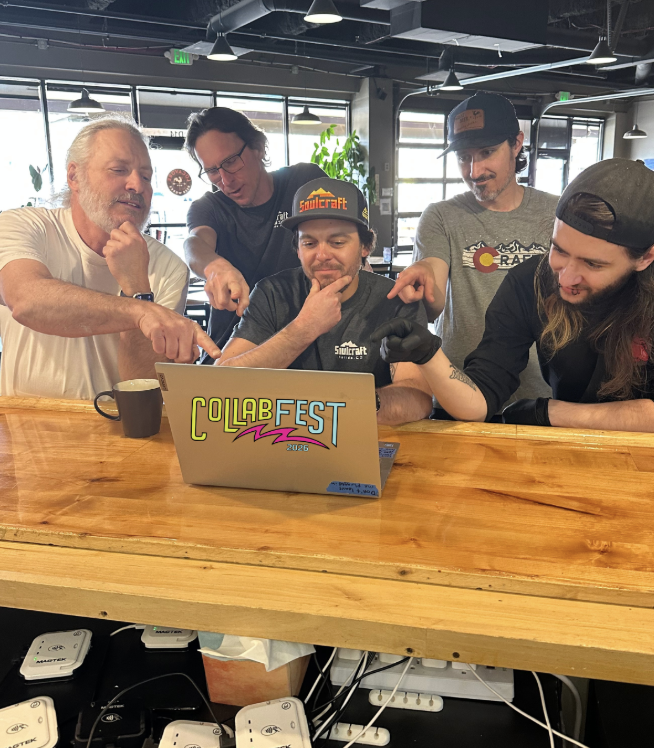
Collaboration Fest 2026 | Westminster, Colorado
Collaboration Fest started in 2014 as a fundraiser for the Colorado Brewers Guild. Its defining rule remains the same: every beer must be brewed by two or more breweries, with at least one Colorado Brewers Guild member involved.
In 2026, 166 breweries poured more than 120 original collaboration beers. Most were single-run beers, making the festival a public testing ground for ideas that might not otherwise make it into regular production.
Three Standout Beers
- Rocky Mountain Advantage — West Coast IPA
Westbound & Down, River North, and Cannonball Creek teamed up on the festival’s official welcome pour. A clean West Coast IPA was a fitting opener, showing that technical execution still has a place alongside experimentation.
- BA Celestial Death — Barrel-Aged Chocolate Black Barleywine
River North and Third Eye Brewing created a 13.5% barrel-aged barleywine with dark chocolate character and bourbon-barrel weight, reflecting renewed interest in barleywine alongside barrel-aged stout.
- Confident Misinformation — Lambic-Inspired Spontaneous Beer
Primitive Beer and Voodoo Brewing created a four-year blend finished in ruby port and rye whiskey barrels. It stood apart from the more adjunct-heavy beers by relying on time, acidity, blending, and barrel character.
What Collaboration Fest Shows
Collaboration is more than a marketing opportunity. It gives brewers room to exchange knowledge, experiment with ingredients and processes, and test ideas without committing to regular production. A tomatillo-and-jalapeño Mexican lager can sit beside a 13.5% barrel-aged barleywine because the format rewards experimentation. At its best, collaboration becomes a form of shared product development.

Mikkeller Beer Celebration Copenhagen 2026 | Copenhagen, Denmark
Mikkeller Beer Celebration Copenhagen (MBCC) has grown from a small Mikkeller bar anniversary event into a major international beer festival known for rare beer and breweries from around the world.
In 2026, many of the festival’s highest-attention beers continued to come from the barrel-aged stout category, particularly beers featuring named barrels, extended maturation, and specialty adjuncts.
Three Standout Beers
- Final Boss — Imperial Pastry Stout
Boiler Brewing’s 13.5% stout spent 31 months in a Willett Family Estate Bourbon barrel before conditioning on nuts, coconut, Madagascar vanilla, and cacao nibs. The beer reflects just how elaborate the upper end of the barrel-aged stout category has become.
- Double Barrel Monolith — Imperial Pastry Stout
Lua Brewing and Little Cottage Brewery went even bigger: 16.1% ABV, Weller and Buffalo Trace barrels, coconut, hazelnut, marshmallow, and cacao nibs. The specificity of the barrels is significant. For this audience, “bourbon barrel-aged” often no longer tells the whole story.
- Kriek B-228 (2022) — Fruit Lambic / Kriek
Bofkont offered a notable contrast with a blend of one-, two-, and three-year-old lambics with whole cherries and Pinot Noir barrel maturation. It relied on fruit, acidity, tannin, and oak rather than sweetness and high alcohol for complexity.
What MBCC Shows
Barrel-aged pastry stout continues to command attention among highly engaged beer drinkers. These beers are expensive and time-consuming to make, but barrel provenance, aging time, specialty ingredients, and scarcity all contribute to their appeal. The challenge may increasingly be differentiation. As more breweries compete with longer aging, named barrels, higher ABV, and elaborate adjunct combinations, balance and execution become even more important. The presence of beers like Bofkont’s kriek also shows there is room at the premium end of beer for complexity without extreme sweetness or alcohol.


Firestone Walker Invitational 2026 | Paso Robles, California
Firestone Walker Invitational takes a selective approach: breweries are invited, brewers are expected to pour their own beer, and attendees get direct access to the people making it.
The 2026 festival featured plenty of big beers, but it also highlighted growing interest in refreshing flavors, service formats, and drinkability.
Three Standout Beers
- pFreal — West Coast IPA
The official collaboration from Firestone Walker and pFriem reflected the evolution of West Coast IPA toward a paler, drier, more aromatic profile than many earlier versions of the style.
- Yuzu Shio Slushie — Frozen Yuzu & Sea Salt Ale
Yoho Brewing’s frozen yuzu-and-sea-salt beer drew attention with a format particularly suited to a warm California festival: cold, acidic, salty, and refreshing. It also showed how presentation and service can become part of the drinking experience.
- Pear Saison — Fruited Wild Ale
Firestone Walker Barrelworks brought a beer with pear aromatics, Brett character, and spritzy carbonation, offering a more restrained counterpoint to the festival’s frozen and pastry-inspired beers.
What Firestone Walker Shows
One of the clearest signals from Firestone Walker was the continued evolution of clean, technically focused beer. West Coast IPA has returned to prominence, but today’s versions tend to be paler, drier, and more aromatic than their predecessors. The festival also demonstrated the importance of format. Frozen beer, savory beverages, and cocktail-inspired drinks can offer an experience that goes beyond the liquid itself. At the same time, lagers, saisons, and wild ales maintained a strong presence, showing continued interest in fermentation, ingredient quality, and brewing technique.


Tallinn Craft Beer Weekend 2026 | Tallinn, Estonia
Tallinn Craft Beer Weekend turned 10 in 2026. Organized by Põhjala Brewery, the festival has become an established part of Northern Europe’s craft beer calendar.
Alongside international trends, local producers are working with rye, birch, juniper, local fruit, Baltic porter traditions, and cider-making techniques to create a distinct regional identity.
Three Standout Beers
- Triple Barrel SXXXY Select — English Barleywine
3 Sons Brewing Co. delivered the highest-rated beer of the festival, a 17.8% barrel-aged barleywine, demonstrating the continued appeal of American high-gravity beer within European festival culture.
- Wormhole One (PULP) — Smoothie / Pastry Sour
Elmeleven’s smoothie sour showed that intensity does not necessarily require high ABV. Fruit concentration, acidity, and texture can create just as much impact.
- Bourbonis — Imperial Pastry Stout
Smedsbo Slott’s 17% stout showed how thoroughly the barrel-aged pastry-stout movement has expanded beyond its American roots.
What Tallinn Shows
Tallinn offered perhaps the clearest example of global beer trends existing alongside regional identity. American barleywine, pastry stout, smoothie sour, high ABV, and barrel-driven beers all performed well. At the same time, Baltic porter, Nordic botanicals, Estonian cider, side-pull lagers, juniper, rye, and local fruit gave the festival a character that could not simply be replicated elsewhere. International beer trends do not necessarily have to come at the expense of regional brewing identity. In Tallinn, the two exist side by side.


The Trends We’re Watching
Barrel-Aged Beer Continues to Move Upmarket
Across MBCC and Tallinn especially, many of the top-rated and most talked-about beers were barrel-aged stouts and barleywines. Barrel source, aging time, ABV, specialty ingredients, and scarcity have all become part of the story.
But as more breweries use the same signals, differentiation becomes harder. A high-ABV stout aged in a well-known bourbon barrel with coconut and vanilla is no longer unusual on its own. Balance and execution matter.
Smoothie Sours Still Have an Audience
Smoothie and pastry sours continue to appear prominently at major festivals. Concentrated fruit, acidity, color, and texture create a high-impact drinking experience without necessarily requiring high alcohol.
The format may be particularly well suited to festival beers, taproom specials, and limited releases, where experimentation is part of the appeal.
West Coast IPA Has Evolved
Today’s West Coast IPA looks different from the versions that defined the style more than a decade ago.

The examples at these festivals tended to be pale, dry, and highly aromatic, often combining established American varieties with sought-after New Zealand hops. The emphasis is increasingly on clear hop expression rather than aggressive bitterness or malt sweetness.
Technical Lagers Continue to Gain Attention
Interest in technically precise lagers continues to grow. With fewer intense flavors to mask flaws, pilsners and other pale lagers put fermentation, bitterness, foam, and draft quality on full display.
That helps explain the continued presence of Czech pale lagers, West Coast pilsners, decoction-mashed beers, and side-pull service at festivals known for much bigger and more experimental styles.
Culinary Beer Is Moving Beyond Pastry
Pastry stout helped establish the idea of beer drawing directly from food and dessert. Brewers are now applying that thinking more broadly to cocktails, frozen drinks, savory foods, cider, wine, botanicals, and regional ingredients.
The strongest examples work when unconventional ingredients complement rather than overwhelm the base beverage.
The Takeaway
Across these four festivals, high-impact beers continued to attract attention, from barrel-aged stouts and smoothie sours to frozen beer and triple-barrel barleywines. At the same time, lagers, West Coast IPAs, saisons, and wild ales reflected continued interest in technical execution, balance, and drinkability.
Rather than pointing to one dominant direction, these festivals show there is room for both experimentation and precision.
For brewers, innovation does not always have to mean adding more. Sometimes it means finding a new ingredient, format, or technique. Other times, it means making a familiar beer exceptionally well.