Dustin Camphouse

Dustin Camphouse has spent 20 years in the malt barley industry, building deep experience across both grain handling and malting operations. He began his career at Anheuser-Busch, working within the elevator system before moving into the Idaho Falls malt house. In 2015, he joined Great Western Malting, where he continues to support growers throughout the region.
Driven by a passion for agriculture, Dustin thrives on helping farmers and embracing the unique challenges each growing season brings. Outside of work, he enjoys spending time with his children and being outdoors.
Ryan Dodd
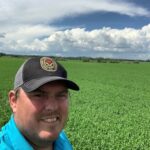 Ryan Dodd brings more than 30 years of experience in the grain industry and has been a key part of Canada Malting since 2002, when the company acquired five grain elevators across Alberta. In addition to his leadership role in grain operations, Ryan owns and operates a diversified grain and cattle farm in Innisfail, Alberta, where he grows barley, oats, corn, canola, and hay while managing a herd of approximately 150 cows each year.
Outside of the malt and farming world, Ryan is deeply involved in his community. He coaches and serves as General Manager for his local Senior AA hockey club, with three appearances at the Canadian National Championship. Ryan is supported by his amazing wife, two beautiful daughters, and a son who is finishing his hockey career and preparing to return home to take over the family farm.
MORE EPISODES
SEASON 6, EPISODE 15: STALK OF THE TOWN: 2025 BARLEY OUTLOOK
PODCAST HOSTS:
HEATHER JERRED – TERRITORY MANAGER, COUNTRY MALT GROUP
BRITTANY DRENNAN – TERRITORY MANAGER, COUNTRY MALT GROUP
MATT SPRINKLE – TERRITORY MANAGER, COUNTRY MALT GROUP
PODCAST GUESTS:
DUSTIN CAMPHOUSE – FARM BUSINESS MANAGER, GREAT WESTERN MALTING
RYAN DODD – DIRECTOR OF GRAIN, CANADA MALTING
Key Points From This Episode:
-
Featuring Ryan Dodd, Director of Grain (Canada Malting) and Dustin Camphouse, Farm Business Manager (Great Western Malting)
-
Deep dive into the 2025 North American barley crop: quality, yields, protein levels, acres planted, and regional differences
-
Discussion of how barley acres keep shrinking in both the U.S. and Canada as barley becomes a more specialty, contract-driven crop (vs. corn and other commodities)
-
Expectations for protein levels, crop size, and acres planted vs. last year: strong yields and plump kernels, but fewer acres overall
-
What brewers should watch for in malt specs going into 2026: lower proteins, higher plumps, and the need to adjust mills and recipes accordingly
-
How regional weather, irrigation, drought, and excess moisture shaped this year’s crop and influenced malt quality and supply
-
Behind-the-scenes look at how Ryan and Justin manage quality, logistics, and farmer relationships—including being in the field during harvest, managing chitted barley, and matching barley to the right malt plants.
Transcript - Stalk of the Town – 2025 Barley Outlook
EPISODE S.6, E.15
[STALK OF THE TOWN – 2025 BARLEY OUTLOOK]
Heather Jerred (00:09):
Welcome back to another episode of the BrewDeck Podcast. I am your host, Heather Jerred. I am joined by our other host, Brittany Drennan, and our new host, Matt Sprinkle.
Matt Sprinkle (00:22):
Hey.
Heather Jerred (00:22):
Yay.
Brittany Drennan (00:22):
Whoo.
Matt Sprinkle (00:22):
Happy to be here.
Heather Jerred (00:22):
Welcome, Matt Sprinkle.
Brittany Drennan (00:25):
Welcome, Matt.
Matt Sprinkle (00:25):
Thanks for having me.
Brittany Drennan (00:27):
Actually, we call him [inaudible 00:00:28]-
Heather Jerred (00:29):
Everybody’s asking. That is his real name.
Brittany Drennan (00:31):
Yeah.
Heather Jerred (00:31):
I didn’t make that up. Matt, can you tell everybody a little bit about yourself?
Matt Sprinkle (00:35):
Sure, yeah. I’ve been with Country Malt for a year and a half, and I’ve been in the beer industry for about 15 years now. Started at a brewery in North Carolina called Foothills, and then moved over to the vendor side about 11 years ago. And it’s been a great ride.
Heather Jerred (00:51):
We have had you on the podcast before. You did come on our, was it the summer beer one, or just underrated beer styles?
Matt Sprinkle (00:59):
That one was underrated beer styles. And my underrated beer style, to this day still, is the grisette.
Heather Jerred (01:08):
I agree. I mean, mine’s the black lager, but I feel like it’s making a comeback. So I don’t think I can say it’s as underrated anymore, because I feel like it’s out there a lot more.
Matt Sprinkle (01:16):
Yeah. We’ve seen with the resurgence of lagers, I’ve seen a lot of schwarzbiers, and dark lagers as well, which really warms my heart.
Heather Jerred (01:24):
So a couple of things before we jump into this episode. Something really exciting, for you guys. It’s not in Canada yet, but it is in the US. We got a new web store. Hey.
Brittany Drennan (01:33):
We’re getting really good feedback, too. At least I am.
Heather Jerred (01:37):
What are some of the new features, Brittany, that the new web store has, that the old web store didn’t have?
Brittany Drennan (01:43):
Yes. So, a lot. Let’s see. Quick reordering, so you can very easily reorder your previous purchases, basically like a copy paste.
Heather Jerred (01:56):
Nice.
Brittany Drennan (01:56):
And then, you can do ACH payments, which is huge. We have a bar that will track how much you’re adding to the pallet.
Heather Jerred (02:09):
I saw this in action. It’s really, really cool.
Brittany Drennan (02:12):
Yeah. It’s like, “Hey, do you want to add a couple more things? Because you still have some space on the pallet.” Smart freight pallet-
Heather Jerred (02:20):
Optimize your freight.
Brittany Drennan (02:20):
… optimizer. Yeah.
Heather Jerred (02:23):
Yeah. I mean, why get 32 bags, and pay full price for freight, when you could get a full pallet? Makes sense.
Brittany Drennan (02:31):
Yep. And expanded product access. So, ordering from a secondary warehouse. So, we’re not Amazon, man. And sometimes we run out of stuff in our warehouse, or people don’t tell us we need it.
Heather Jerred (02:44):
And we don’t stock everything in every warehouse.
Brittany Drennan (02:46):
No, yeah.
Heather Jerred (02:47):
I know my Calgary warehouse is a bit smaller than the warehouse out in BC, we ship a lot of stuff from BC when we have to, so it’s great. It expands, basically, the portfolio for everybody’s warehouses. So that’s really cool.
Brittany Drennan (02:59):
Yeah. It gives you the option to say, “Hey, I still want this, so I will go ahead and opt in to have it shipped from elsewhere.” So, awesome.
Heather Jerred (03:08):
So, cool. Yeah. Reach out to your sales rep for more information. They can help get you set up, and kind of walk you through some of the stuff. Yeah, it’s really cool. And I guess Canada, stay tuned.
(03:20):
So on today’s podcast, we are doing our annual crop update, because, ’tis the season. The barley crop is off, we are now looking at almost full inclusion of new barley. So we got to talk to Ryan Dodd from Canada Malting, and Dustin Camphouse from Great Western Malting. And they’re going to give us a really good deep dive into the entire 2025 barley crop in North America. So, let’s jump in.
(03:44):
We are now joined by a couple of our coworkers, actually. We have Dustin Camphouse, the Farm Business Manager for Great Western Malting. And Ryan Dodd, Director of Grain for Canada Malting. Welcome to you both. Before we fully dive into talking about the crop, which everybody, of course, wants to know the most about. Can you tell us a little bit about yourselves, and a little bit about your role with the company?
(04:07):
Dustin, you want to start us off?
Dustin Camphouse (04:08):
Yeah. So like you previously mentioned, I’m the Farm Business Manager on the State side of things. And in that role, I contract barley and a little bit of wheat with area producers from just south of Ryan, up on the Canadian border, clear south down to Utah. And then from Wyoming, clear over to Oregon and Washington. So a pretty big swath, and all of that barley and wheat supplies the Pocatello facility, and a little bit into Vancouver still.
Ryan Dodd (04:39):
And for me, I’ve been with Canada Malting now, just celebrated my 23-year anniversary.
Heather Jerred (04:46):
Wow.
Ryan Dodd (04:46):
Yeah. So I’ve earned the gray hair.
Heather Jerred (04:50):
I was going to say, you’ve been here longer than Don Moore. Do you know that?
Ryan Dodd (04:54):
Yeah. Actually, I have.
Heather Jerred (04:54):
That’s saying something.
Ryan Dodd (04:59):
So I’m the Director of Grain, and we have nine country elevators in Canada. That’s where I started in 2002, when we purchased the grain elevators. I’m actually born and raised right beside the Niobe grain elevators, so that’s where our family farm is. And I buy a lot of grain. There’s roughly around 450,000 tons of barley wheat, rye, and oats that we purchase throughout three provinces, feeding into Calgary, Montreal, and Thunder Bay.
Brittany Drennan (05:31):
I thought my seven years at the company was impressive, so thank you for one-upping me there.
Heather Jerred (05:37):
Just a little bit.
Brittany Drennan (05:39):
Wow. Okay. Before we get super technical, I’m just curious, and I think our listeners would be too. If you could walk us through a day in the life of a farm business manager, and a day in the life of a director of grain, what does that mean exactly?
Dustin Camphouse (05:58):
During harvest time, my morning starts about like anybody else’s, pretty early, and a lot of that is just handling logistics. So we’ve already contracted the barley, it’s been grown, and now it’s time to get it into storage. It’s usually phone calls, and face-to-face visits, checking on the actual quality of the crop. That’s one thing I’ve noticed with Great Western is, compared to some other companies, and even CMC. I know Ryan’s team, and us on the State side of things, we’re in the field every day of harvest.
(06:33):
So get up, make the phone calls, and then get out in the field, and start kind of directing traffic and collecting samples, almost all day long. And just make sure that the quality of the barley that we’re receiving stays congruent throughout, and if there is a hiccup or a problem, we can identify it early and keep it segregated from everything else.
(06:52):
So that’s pretty much a typical day during the harvest season. Then off season is, really keeping an eye on the markets, kind of getting the feel of the lay of the land, like what producers are going to want to grow the following year. If we need to make any changes, as far as volumes go, for the next year. And then, logistics into the malt plants, like Ryan mentioned previously, I think we’re both pretty hands-on in that. I know on the GWM side, I handle all the truck logistics going into Pocatello, so that’s pretty intensive in the off season.
Ryan Dodd (07:24):
The key things that Dustin said over and over, in my head, was quality, quality. So for me, I never really know for sure what I’m doing. I can have a game plan when I’m heading out in a day, but that could get twisted up, and I could be in Calgary, or I could be driving out into one of our facilities, if we have breakdowns. I manage the CapEx, so any of the investments and maintenance and into our elevators and our facilities. I go into Calgary quite a bit to deal with logistics, what they need, the supplies that have to come into Calgary by variety, protein levels. I also go into the elevators quite a bit. I’m always in an office somewhere, every single day.
(08:07):
But for me, harvest. Harvest, I get up at, oh I don’t know, 4:30, five o’clock in the morning. Whenever the sun starts to come up, so you can get rolling with your day. And I’ll go to the farm, usually do some work on the farm before I go into the office. Once I go into the office, I could be going to a farmer’s yard, I could be going to the malt house, could be going to pick up parts, I could be driving to Saskatchewan or Manitoba.
(08:31):
I like to get out and be with the farmers during harvest, because you really get to know what’s happening on the farm. You get to see the barley quality as it’s coming off, and you get real time samples so that you can know what kind of product that you have. Because we also have to make decisions that, you know, we had rain in Manitoba this year, so we had to find some better barley quality in other areas, that took over for the chitted quality that they had coming off out there. So you have to be able to know what’s coming off, know what’s happening in every area, so you can maybe divert. Or maybe you don’t have to divert, maybe you got great product everywhere. I haven’t seen that too many years, but it’s possible.
(09:14):
So it’s definitely quality, quality, quality, managing that quality. And then like Dustin also said, you spend so much time managing logistics because we all know, freight is so expensive. So if you can buy the right barley and have it in the right place to move at the right time, you’re going to capture your best freight incentives at that time, as well.
(09:35):
So for me, I’ve got a whole entire elevator group that you’re working with employees, as well. So you’ve got 32 employees out in the country elevators that, you’ve got to make sure that your employees are safe, and taken care of. And so we also work with the teams in that aspect, as well.
(09:56):
So it’s usually, every day you’ve got a lot of stuff to cover, which is really rewarding because the farming industry and farmers are some of the best people in the world.
Brittany Drennan (10:08):
I think it’s good for brewers and listeners to understand that we have people paying that much close attention to what’s going on in the fields, and with our farmers. And it’s kind of easy to see grain come in a bag, and toss it in, and move on with your day. But to have a real understanding about what’s going on, in y’all’s day-to-day, is very cool. So thank you for that.
Heather Jerred (10:35):
And how much time you do spend with the producers, with the farmers, and just how important those relationships are for us to work with our local farmers, I think is really important for everybody to know.
Ryan Dodd (10:47):
I’d like to see the farmers succeed. You know that you’re doing something right when the farms are succeeding, and you’re succeeding as a business. So it’s definitely rewarding.
Heather Jerred (10:57):
And we obviously talked about this before we hit record, but Ryan is a fifth generation farmer-
Ryan Dodd (11:02):
Yeah.
Heather Jerred (11:03):
… in Alberta?
Ryan Dodd (11:04):
I am a fifth generation, yes.
Heather Jerred (11:06):
And his son will be sixth generation, which is crazy. I know we work really closely with the Hamill family, as well, out of Penhold.
Ryan Dodd (11:15):
Great people.
Heather Jerred (11:15):
And they’re sixth generation, seventh with the kids, I think.
Ryan Dodd (11:20):
Yeah, I think they’re actually five and six, but we’re about the same. I mean, we all homesteaded in here in the late 1890s. Which is, when you say 1890, it’s just like, wow, it’s unbelievable.
Heather Jerred (11:33):
It feels creepy.
Ryan Dodd (11:35):
Actually, my homestead certificate is on my kitchen table, right across the room. My parents just gave it to me and said, “You should probably have one of these framed.” So, yeah, it’s pretty special. And the Hamill people, absolutely. I just talked to them, probably about an hour ago, I just talked to them in Red Deer at the trade show. And what an amazing family.
Heather Jerred (11:59):
Oh, they’re so lovely. Yeah. For anybody listening that doesn’t know who the Hamill family are, if you’re not from Alberta, they are the owners of Red Shed Malting, which is a craft maltster that we do work with, for Country Malt Group. I am the only salesperson that actually gets to rep that brand, because we only sell it in Western Canada, so I’m the lucky one. But yeah, they’re an amazing group of, well, they’re an amazing family, and they’ve been selling barley to Canada Malting forever. So we’ve been working with them forever.
(12:25):
Let’s jump into a little bit more talking about the crop itself. Can you both remind us, and remind everybody listening, about our really important growing regions? Obviously we’ve talked a lot about Alberta, and where our elevators are for Canada Malting. And what other growing regions do we have?
Dustin Camphouse (12:45):
So for the US, Great Western sources a lot of their barley off the Snake River Plain. So, high desert climate, we have hot days, cool nights. And then, the one benefit that Ryan doesn’t have, is irrigation.
Heather Jerred (13:01):
That’s true.
Dustin Camphouse (13:01):
So our farmers get to apply the water they need throughout the growing season, and not quite as dependent on Mother Nature to cooperate in that aspect. But as harvest nears, then we really are at the mercy of Mother Nature.
(13:17):
So the big one for GWM is the Snake River Plain. And then, as far as that, we do source some out of the Montana areas. And then, again, Oregon and Washington are probably the just ranked in that order, one, two, three, and four. So that’s a lot of it. As you get into Montana, Oregon, and Washington, those are all dry land areas that can really produce really, really good barley, or have a lot of heat stress like this year. And then you end up with thin and higher protein barley.
(13:53):
So, always good to be diversified on where we’re pulling our barley from. The old saying, “Don’t put all your eggs in one basket,” is why we continue to source from multiple growing regions.
Heather Jerred (14:07):
Yeah.
Ryan Dodd (14:08):
Yeah. I mean, we need everything. You need that higher protein for your distilling malt. You need your lower proteins for your crafts. So for Alberta, we buy barley pretty much all the way up to Edmonton, a little bit beyond Edmonton, but through the Highway 2 corridor, leading down along the mountains. Which allows us to have those really nice cool evenings, and you’ve got dews and precipitation that rolls off the mountains, generally. And you find that Alberta produces, that dark soil produces a lot more of a lower protein. And then we get into the Southern Alberta, where it gets a little hotter and drier, and we can usually find our distilling malts, and we use that for the Jack Daniels, micro distilling markets.
(15:09):
Saskatchewan, we pull pretty much through central, all the way down into the south, with our Watrous and Leross elevators. That’s kind of that banana belt, that it’s a real good barley growing area and region that produces some mid-range to low proteins, all the way out into Manitoba, where we have our Norman and Mariapolis elevator. And Norman siding is, again, a nice dark soil that produces a good, decent, mid-range protein. And Mariapolis, unfortunately for them this year, they just could not get it to stop raining. They still have crop out. It’s raining, still. And there’s corn and canola out, and guys just can’t get it off, there’s standing water in the fields. So there’s going to be some issues there, going into next year.
(16:03):
But I will say, for us this year, and all of the years that I have bought grain. Started in ’94, ’95. And I would say this is the best barley year that we’ve seen. The harvest was wonderful, we were able to get the barley off in really good quality. The growing season was a little dry, for what we thought. We were a little concerned about proteins going in, and the proteins have been really good. The plumps have been 96, 7, 8, off the combine.
Heather Jerred (16:42):
Wow. Good news.
Ryan Dodd (16:44):
Yeah. And the yields.
Heather Jerred (16:45):
Yeah.
Ryan Dodd (16:45):
The yields were really good for us this year. So producers are quite happy with the crop that came off, and so are we.
Heather Jerred (16:57):
I feel like it’s-
Matt Sprinkle (16:57):
That’s great. That’s great.
Heather Jerred (16:59):
Yeah. Go ahead, Matt.
Matt Sprinkle (17:01):
Dustin, how are the yields for Great Western this year?
Dustin Camphouse (17:06):
They were super good, under irrigated. The USDA has it projected as a new record yield for Idaho. So that’s going to be pushed up to, I think, 112 bushel the acre, across all acres. So that would include our dry land stuff. But yeah, super heavy winter crop, when it comes to yield, and then the spring crop was right behind it. So all the farmers were very, very happy. It did present some challenges at harvest, like trying to get it off, and put in storage. But we managed to get it done, and everybody, just to echo Ryan’s sentiments, were really happy with yields this year. And then, as far as quality goes, just super, super good quality there again, too. 96, 97 plump. So that also helps yield big, heavy, dense kernels, and everybody’s happy.
Ryan Dodd (18:05):
Yeah. I tend to believe that Mother Nature has a way of helping taking care of itself, or replenishing stocks, or maybe it’s a sign for something in the future, giving us a crop that is substantial yields and excellent quality. So we’ll have to watch what happens for next year. We might be a little wet in Manitoba, in areas. We might be a little dry in Alberta, in areas. Maybe that just means that we need to be picking up some overage, and locking in some good quality product for next year while we already know it’s in the bin. It’s there.
Brittany Drennan (18:41):
Yeah. When you have a good crop year, does that make you nervous for the following year?
Ryan Dodd (18:48):
In Alberta… Well, in Canada. We’ve been dry. So I’ve been nervous for-
Heather Jerred (18:56):
Six years, now?
Ryan Dodd (18:57):
Yeah.
Heather Jerred (18:58):
Six years now? It’s been nerve-wracking.
Ryan Dodd (19:00):
Like when we’re bringing barley from Australia? Hello, there’s an issue. And we’ve never really fully recovered on our S&Ds. We always carried a one million, two million carry, in Canada. And then it disappeared. And in ’21, I mean, if that didn’t scare the ever-living daylights out of you, I don’t know what would. You’re definitely-
Heather Jerred (19:34):
You’re not paying attention.
Ryan Dodd (19:35):
Yeah. Yeah, exactly. So when I see product, that we have today an opportunity to purchase, I think that we’d make a very bad mistake by not purchasing some of this product, and having it for next year. Because it is definitely some of the best barley I’ve seen.
Brittany Drennan (19:57):
So how many acres are we talking about, here?
Dustin Camphouse (20:02):
Yeah. So for the US, for ’25, it was a record low of being planted. So, put 2.3 million acres in the ground, and rolling around to harvest time, or that was down about 3% over ’24. Harvest comes around, and after acres were abandoned, farmers harvested about 1.7, almost 1.8 million acres. And that’s down about 7% year-over-year from ’24. So while yields and quality were super good, acres in the US continue to shrink.
Brittany Drennan (20:38):
True.
Heather Jerred (20:42):
Can you speak a little bit to why people wouldn’t be planting as much barley?
Dustin Camphouse (20:46):
Yeah, so corn, right? For the US, barley really has become a specialty commodity. To get farmers to plant it we have to pay up, and barley’s not looked at as a feed supplement for animals anymore, in the US. So of the, let’s just say 1.7 million acres that was harvested, probably 1.4, 1.5 of that was all contracted for malt barley. So as that finite demand decreases, there’s less barley acres planted, because the feeders or the dairies are going to feed corn, especially when corn is cheap, over barley every day of the week. So that’s a struggle in the US is, barley really is a specialty product, or a specialty commodity. And to get the acres, we have to pay up for it. And then at the end of the day, there’s only a finite demand. So we have to kind of get what we get, at the end.
Ryan Dodd (21:59):
Yeah. Canada, I mean, we used to see seven million, eight million acres. Now you’re down to five, six million. The cattle numbers have dwindled. I mean, the numbers are at record lows. Feed lots aren’t feeding anywhere near what they used to. And then, with corn being strong in the States, the corn has been coming into Southern Alberta, and pushing feed barley out. So guys have started to look at other things to grow, whether it’s fava beans, or canola, or wheat, or corn. And there’s lots of stuff being grown. Everything’s cyclical, though.
Heather Jerred (22:44):
Yeah.
Ryan Dodd (22:45):
I mean, you see the cattle prices now. So guys who came into my office and laughed at me saying, “Are you still calving those cows?” And, “Yeah, I am.” “I got rid of mine, and I’ll never have them.” Well, now they’re walking in my office saying, “You know what? I bought 30 cows.” So it’s all going to go in a circle, I honestly don’t see barley increasing too much in the future.
Heather Jerred (23:13):
So you kind of think where we’re at, is where we’re going to be, for a bit? Or do you foresee it going down more?
Ryan Dodd (23:18):
No, I think we’re going to kind of settle. The political tariffs, and tariffs into China with canola, because you’ve got tariffs on for your electric vehicles and all. Politics needs to stay out of agriculture. But I know this is not a political show, so I won’t get going on it, but let the farmers sell their products. Please, let’s keep the tariffs away, and let’s get back to work and allow the producers to market their grain.
(23:59):
So I think the guys growing canola, they’re very nervous, just because a flick of a switch or one bad tweet on X might throw another block on selling their canola product. And wheat, a lot of guys deferred to wheat, and now we can’t move the wheat that we’ve grown, because the wheat was a very substantial crop as well this year, with yields.
(24:26):
So what do you fall back to? Growing domestic. What can you market domestically? And that’s what I tell my guys, “Stick to your rotation. You can market domestic barley. Whether it’s malt barley, or it’s feed barley, you can find a domestic home. You don’t need to worry about your exports.” So it’s definitely something that guys are considering, which is why I think that barley acreage will stay flat for the next few years, until we figure out this political landscape that we have going on, which will probably take a few years.
(25:05):
And then, once that gets figured out, I worry for barley acres. I really do. Just that, we need to get more development into higher yielding varieties. There needs to be better disease resistancy. And until you see some funding and corporations coming in and developing these new varieties, all the money seems to go towards the corn, or the wheat, or the canola, that is doing this and that. And it yields like crazy. Meanwhile, barley seems to be a forgotten piece, so that should be one of the focuses of our sustainability, and moving forward, is getting more of these varieties that perform better on the same acreage that we’re growing.
Heather Jerred (25:57):
I’m definitely seeing that more and more, like more and more discussion around finding new varieties, especially more drought-resistant varieties, going into the fact that we don’t have irrigated acres. And we are dealing with a lot of hefty droughts through our summer now, versus having our good moisture in the summers. So I’m seeing a lot more talk, out and about, about that. And I mean, I guess speaking of drought, could we talk about some of the troubled areas that we did have this year? Obviously, we said Manitoba had a lot of rain. Did we have any issues with smoke from any of the wildfires, in both the US and in Canada?
Ryan Dodd (26:32):
The wildfires didn’t affect us too bad. It’s not like the previous, I think it was ’17 or ’18, where the wildfires that really, really blanketed Alberta and Saskatchewan with smoke, kept the sunlight from penetrating through. I mean, maybe that was ’19, I don’t know. I guess when you get here for so many years, you kind of forget which year is which.
Heather Jerred (26:56):
It all just [inaudible 00:26:58] together.
Ryan Dodd (26:59):
So the smoke wasn’t too bad, but we had areas that just didn’t get rain. And where it was really affected, where it was really affected was the grass and the hay crops. The timely rains came through, inches, which went down into the subsoil. And our crops had deep-rooted down, but the grasses burnt from the hot heat. So the crops were able to pull through, and the cow pastures and stuff were really rough throughout eastern, central part of Alberta, into parts of Saskatchewan as well. The southern parts of Saskatchewan, the southwest portion. Again, Rosetown, Kindersley country really suffered. And I mean, those guys are going to need a crop soon, because they’re not going to be able to pay their crop insurance premiums anymore. They just keep on going up every year, because they keep on having disaster after disaster.
Heather Jerred (27:56):
Yeah.
Matt Sprinkle (27:57):
Yeah. So with the rain, we always worry about chitting. Can you guys speak a little bit about chitting, and what that means for you guys?
Ryan Dodd (28:06):
Yeah, I definitely can. Chitting is your pre-harvest sprouting, which is obviously activity within the embryo itself. And we’ve done a good job at breeding these malting varieties to make them want to grow, and grow right away. And so you get a little bit of water or moisture on some of these newer high enzymatic varieties, and the first thing that they want to do is germinate. It’s not enough to be growing a viable sprout, which is good, but what you need to do is you need to identify your best chitted product, and utilize it right away while you can still make a good malt out of it.
(28:51):
And we’re able to do that in some areas. And in some malt houses, it doesn’t work very well. Our Montreal facility has a very hard time malting chitted barley, and making a good malt out of it. Thunder Bay does an excellent job, and in Calgary, some varieties just don’t work in their type of steep tanks that they have.
(29:16):
So you need to be very careful with what you handle, and what you purchase, and utilize. But ultimately, you’re still able to utilize some of that product, and allow the farmers an option to come into the malting industry still, and capture a premium over the feed market. So you’re trying to help the farmer out, but still, you need to make sure that you’re making the best malt that you can for the brewers, otherwise we’re not going to have any customers to buy that product.
(29:42):
So that’s kind of what chitted barley does for us. In Canada, we can’t carry chitted barley beyond, into December. Because once it gets too cold, it’ll freeze, and it dies. It’s very susceptible to weather change, so you can’t buy too much of it. You can only buy as much as you can manage through, off the combine, whenever harvest is, all the way to November time. Somewhere mid-November. So five, 10,000 tons of it, in some years, it’s all you can handle. But we’ve had years like ’02, ’07 and ’17, that were just nothing but chitted barley. So you needed to make sure that you were handling the best of the best.
(30:34):
So, chitted barley, it’s kind of a swear word. Nobody really wants to see it, but unfortunately, it comes somewhere every year. Somebody’s got it.
Matt Sprinkle (30:48):
And Dustin, how does that work for you, pulling from mostly irrigated crops?
Dustin Camphouse (30:54):
Yeah. Like I had mentioned earlier, once the water’s off and that crop’s starting to mature, we’re at the mercy of Mother Nature. And Ryan’s been here long enough, and I’ve been along here, in the industry long enough to remember 2014. The whole region, every major barley producing region received eight plus inches of rain, at harvest.
(31:22):
And it’s the same thing. With all the private breeding that goes on, all these new varieties are bred super hot for the brewer maltsters. So when that happens, you get a little bit of a sprinkle, and you’ve got chitted barley. And just the same as Canada, we try to maximize that crop that’s out there, at the very first of the production year. Kind of get it in, get it out of the way, still make quality malt. And just as, similar as to Ryan, once it turns cold it just seems to die.
(32:02):
And to echo Ryan’s sediments, until some of the major corporations start stepping up, and assisting with the breeding programs… Like, in the US, we really don’t have any barley breeders anymore. The bulk of it is coming from the brewer maltsters. So until we kind of get the industry all together, and start funding some of these public-private programs to get us some new varieties, we’re kind of on the slow road, I guess, to getting back to some maybe dormant varieties.
Brittany Drennan (32:47):
Can both of you speak to geographical areas that were kind of the most strong, with best crops?
Dustin Camphouse (32:55):
Our heavy hitter every year is the Snake River Plain. The crop went in early, it came off early, had perfect growing conditions throughout, and we didn’t receive any harvest rain until, man, mid-September, when we had already moved into the high country. So, elevations above 5,000 feet. So we had probably 85, 90% of the crop harvested in storage, before we seen any rain. There’s a reason you get on I-15 to go up and see Ryan, and there’s a definite reason why all the malt houses in the Western US are on top of the Rocky Mountains. Because, man, it makes great barley here.
Ryan Dodd (33:40):
Yeah. Our central Alberta region, that Niobe elevator right around my house, I’ve never seen a crop like that. I saw the lowest protein I’ve ever seen in barley, this year. Copeland came off at seven and a half protein.
Heather Jerred (33:56):
Seven and half?
Ryan Dodd (33:57):
Seven and a half, yeah. And then you tell the farmer, “Well, sorry, your barley’s too low in protein.” “What are you talking about?” Eights, lots of eights, nines. It’s unbelievable that the barley quality came off like that. 98, 99 plump, the yield being 150. And I had one guy sending me, now, don’t get me wrong. He was sending me the video of the best spots in his field, but he was cracking 200 bushels. And 200, I’ve never seen that. So you talk to some of the old boys, they’ve never seen it. And the crop didn’t look like it was two crops. It just looked like a good crop. But, holy lightning. And what happened there was the weather was so amazing at harvest that the tillers that grew up underneath came to full maturity, and they were able to actually make a viable kernel. Where in years prior to that, usually they burn up and shrivel up, and disappear out the back end of the combine. Or you swath it, and they disappear, just as green kernels.
(35:09):
But this year they were able to make a viable kernel. The yields bounced. So I don’t know if we’ll ever be able to get back to another year like that, but it was sure fun talking to farmers, and having them out in the combine saying, “Are you watching my tanks right now? Where’s this barley coming from?” And yeah, it was amazing. But that area, for us, was just unbelievable this year. The videos guys would send me of the barley running into their grain tanks. It was mind-boggling. Even for me, I would do my combining myself, and this year I was actually driving my own grain truck. So basically, I was going from start to finish, and I was getting tired. It was like, you’d go up and down, and you’d have to go dump into the grain truck because the crop was running that much.
(36:03):
And then you’re worried about your bin space, and try to go to the store and buy some more bins. Well, you couldn’t, because everybody’s already buying them. So it was a good thing, real good thing. Happy to see the farmers invest in some more grain bins here, which is a good thing for us, too.
Matt Sprinkle (36:19):
Yeah. So digging down into some specifics, you’ve mentioned some pretty low protein levels coming out of the Niobe region, but what do you guys do for that super low protein barley that comes in? Are you able to use it?
Ryan Dodd (36:33):
We’ve got grain elevators that have 32, 33 different segregations within them, and you can segregate all those protein levels. So what we do is, we probe the truck when it comes to the elevator, so before the grain actually even drives up inside the elevator we know exactly what’s on the truck. And then that way, when we unload it, we can bin it appropriately, so it can be utilized into whoever, whatever blend that we need to, or into whatever malt plant that needs it.
Matt Sprinkle (37:03):
What would you say the average protein is, coming out of Canada this year?
Ryan Dodd (37:07):
I would bet that we are at 11.
Heather Jerred (37:08):
Perfect.
Matt Sprinkle (37:11):
How about Great Western? What’s the protein level coming out of Idaho?
Dustin Camphouse (37:16):
We’re going to be 10, mid to upper 10s, is where we’re at. Our heavy crop comes from guys that don’t mind increasing their inputs. We’ve got a lot of guys using green manure instead of synthetic fertilizer these days, and that’ll push up the nitrogen a little bit. So we don’t typically see a whole lot of lower proteins, down to the single digits anymore, with guys utilizing new stuff. So that’s kind of a right at the sweet spot. 10.5 to 10.8 is kind of where we’re going to hit this year.
Brittany Drennan (37:48):
What about your kernel sizes, Dustin?
Dustin Camphouse (37:52):
We’re going to average, I think the last time I looked across all of our offer samples, like 93, 94 plump across everything. So really plump, heavy kernels.
Heather Jerred (38:02):
So we talked a little bit about varieties. What did we see planted the most in certain areas? Did we see anything new? Any surprising ones that were planted?
Ryan Dodd (38:11):
For us, we had a lot of Churchill, which is a low enzymatic, which is starting to eat up more and more two-row acres, that Copeland would’ve taken. It’s even diving into the Synergy acres, as well. Synergy was still the number one variety seeded, but it is starting to drop off, which doesn’t hurt my feelings at all.
Heather Jerred (38:37):
Not a fan?
Ryan Dodd (38:38):
Yeah. Well, I mean, it’s very unpredictable. And you just, I mean, from one batch to another, and it could be the same field from the same farmer. And you get two totally different batches. It’s just unpredictable. And then it’s unpredictable in certain breweries, as well. So that’s some of the… I’m not a brewer. I’m a farmer, I’m a grain buyer, so I’m not going to speak on that end of it, but that’s some of the feedback that I’ve definitely had in the past.
(39:13):
Fraser, high enzymatic, you’re seeing it take over a lot of acres for Metcalfe. And then we’ve got more and more interest in non-GN, the Dram, the Stanza, those varieties that are starting to come in, we’re seeing a little bit more of a request from some groups for those varieties. But, other than that, it’s Copeland, it’s Synergy. It’s those staple varieties that have been around for a lot of years. Metcalfe’s basically gone, though.
Heather Jerred (39:44):
Yeah, it’s just year-over-year, you can see less and less Metcalfe being collected.
(39:47):
Yeah.
Ryan Dodd (39:48):
Disease really took over Metcalfe. Those older varieties, once they get to a certain age, and the disease kind of works its way in, those varieties just don’t yield anymore. And it’s too bad, because Metcalfe and Harrington and the… Now I’m really starting to date myself. Holy moly. But those varieties were, back in the day, they were phenomenal. Guys loved them. But you got to keep up with the times, and these newer varieties, they’re pretty hot. So the Churchill, the Fraser, those varieties are really starting to catch on, and guys are really enjoying growing them.
Heather Jerred (40:26):
What about down in the US, Dustin?
Dustin Camphouse (40:28):
If you look at total variety mix, the brewer maltsters will dominate the marketplace. But for GWM, our heavy hitters are a spring type called Odyssey, that’s-
Heather Jerred (40:40):
It’s also a low GN, is it not?
Dustin Camphouse (40:44):
Yep. Yep, it is. It’s a GNL variety. I brought it over, it’s actually a European variety, and it does have some dormancy so guys really like it. And so, that’s probably our biggest on our portfolio.
(40:57):
And then number two and three is a couple of winners, a European winner from KWS called Dunmow, and it’ll be a lower protein variety. And then, we assisted with a variety coming out of Oregon State, a winter variety called Thunder. A little bit higher enzymatic package, but those are probably the big three for GWM right now.
(41:19):
And then, a mix of everything else to accommodate the high country. Like Ryan mentioned, we utilize some Fraser down here in the States, for our higher elevations, a little bit of Synergy. And then, really just trying to get away from the brewer maltster varieties, because they are so hot, and there is a chance of chitted barley at the end of it all.
(41:41):
And then as far as new ones, just like Ryan mentioned, the distillers are really come into the market the last, probably five or six years, maybe even seven years. And said, “Hey, what about us?” So really looking at zero GN varieties, and for us, dual purpose varieties that can go to the distiller and/or still be used for the brewer. And we’ve got a couple in the works there, but it takes so long for seed expansions. And then, my boss, Clay, he always says that a variety has to meet the three Ys to get acceptance. And that’s yield in the field, so the farmer can make money, yield in the malt house so the maltster can make money, and then yield in the brewery so the brewer can make money. So while they’re out there, they might have passed the first Y, but maybe not the second Y, yet.
Heather Jerred (42:28):
Yeah.
Matt Sprinkle (42:29):
Well, it sounds like we’ve got some great barley coming in for 2026. Protein, good yield, good plump. What else should the brewers be looking for out of this barley crop?
Ryan Dodd (42:42):
Good extracts.
Heather Jerred (42:45):
Yeah.
Ryan Dodd (42:47):
I mean, I haven’t had a whole lot of feedback yet from what the new crop stuff is doing in the brewhouse. I haven’t heard anything. I’m excited to hear something. But I think that, I mean, it should be probably one of the best years that we’ve been able to put out there. Our barley’s phenomenal. And, like I say, maybe they should up their sales into next year, hey?
Heather Jerred (43:17):
That’s right.
Ryan Dodd (43:21):
Lock in some of this barley, and product that we’ve got. When you’ve got something that works, and it’s a good value, run with it.
Brittany Drennan (43:30):
Thanks for the assist there, Ryan.
Heather Jerred (43:32):
Yeah. I slipped him a 20 for that.
Ryan Dodd (43:33):
Yeah.
Heather Jerred (43:36):
I’ll owe Ryan a beer next time-
Ryan Dodd (43:36):
There you go.
Heather Jerred (43:37):
… I’m back in Alberta. I think one thing that we always say, especially now that we’re coming into new crop inclusion. For brewers, pay attention to your COA, be looking at your COAs. You are getting more and more of the new crop, now. So as the guys said, you’ve got lower proteins and you’ve got higher plumps, so you might have to adjust your mill. So you might want to take a look at that.
Brittany Drennan (44:01):
Okay. Well, we’re going to end on a super fun question. We like to ask everyone, at the end of your day, what is your favorite beverage? What are you opening up after you’re checking all the stellar quality on the farms?
Heather Jerred (44:16):
It doesn’t have to be beer, but-
Brittany Drennan (44:18):
No-
Ryan Dodd (44:18):
[inaudible 00:44:19]
Brittany Drennan (44:19):
… it can be orange juice. I have no idea.
Ryan Dodd (44:22):
I don’t know if I could nail it down to one.
Heather Jerred (44:24):
You could have more than one.
Brittany Drennan (44:24):
Oh, okay. Top three.
Heather Jerred (44:28):
You can have more than one.
Brittany Drennan (44:28):
Let’s go.
Ryan Dodd (44:28):
Yeah.
Brittany Drennan (44:28):
Top three.
Ryan Dodd (44:30):
I became a real fan of the only rye whiskey, in Red Deer. Not that I’m any kind of a souse or anything, but I did drink a whole bottle on my own one night.
Heather Jerred (44:42):
So you know it’s good.
Brittany Drennan (44:42):
Commendable.
Ryan Dodd (44:48):
And felt absolutely fabulous the next day, which was really mind-boggling for me. I do like a nice sip of that, just straight, just a nice little sip and sit down and relax, and just kick my feet up. But there’s not many nights that I’m in the house before 9:00 or 10 o’clock at night, so.
Brittany Drennan (45:07):
And you’re getting up at 4:00? That’s insane. I could never. That’s a farmer. I could never.
Ryan Dodd (45:14):
You better not move to a farm.
Brittany Drennan (45:16):
Wait, do you have Daylight Savings Time, there?
Heather Jerred (45:19):
Yes.
Ryan Dodd (45:20):
Yes, we do.
Brittany Drennan (45:20):
Okay.
Heather Jerred (45:21):
That is so funny. Do Americans not know that Canadians do Daylight Savings Time, because you are not the first-
Brittany Drennan (45:25):
No, don’t you have a province, you have a province that doesn’t though, right?
Heather Jerred (45:27):
Saskatchewan does not do Daylight Savings Time.
Brittany Drennan (45:29):
Okay, so we’re not totally crazy.
Heather Jerred (45:30):
You are like the third person at work to ask me if Canada does Daylight Savings Time, this week.
Matt Sprinkle (45:36):
I definitely asked you two days ago.
Heather Jerred (45:37):
You did. Yeah.
Brittany Drennan (45:38):
That’s fair.
Heather Jerred (45:38):
Yeah. But it wasn’t just you two. Yes. Canada does Daylight Savings Time, except for Saskatchewan.
Brittany Drennan (45:43):
Forgive our ignorance. Apologies.
Heather Jerred (45:45):
Dustin, what are you drinking at the end of the day?
Dustin Camphouse (45:49):
Hopefully it’s free, and hopefully it’s cold.
Heather Jerred (45:49):
Yeah.
Brittany Drennan (45:53):
So, water. Water.
Heather Jerred (45:54):
Yeah.
Dustin Camphouse (45:55):
No, no. In reality, I love a cold draft Mac & Jack’s. If I’m somewhere where that’s on tap, that’s what I’m drinking. And then, if not, I really support our regional brewery, Grand Teton Brewing. They have a 208 Pale Ale that is pretty good.
Brittany Drennan (46:12):
So, pale. Do you have a specific style of beer that you migrate to?
Dustin Camphouse (46:19):
Just whatever seems to hit the palate. I’ve come across a sour that I’ve liked, I’ve come across a Pilsner that I’ve liked. But yeah, always kind of fall back to the old reliables.
Brittany Drennan (46:32):
Yeah, that’s fair. I find mine is weather dependent.
Heather Jerred (46:36):
I drank dark beer no matter the weather, though.
Brittany Drennan (46:38):
That’s fair. That’s fair.
Heather Jerred (46:38):
I do have that going for me.
Matt Sprinkle (46:40):
Same. Same. But we’re also shifting into dark beer season.
Brittany Drennan (46:45):
Yes, we are.
Heather Jerred (46:46):
Oh, there’s so many more stouts on the market-
Brittany Drennan (46:46):
I’m so excited.
Heather Jerred (46:51):
… right now. Oh my God. I went to a brewery and they had four different ones on, last night.
Ryan Dodd (46:53):
Seems as I do the purchasing of the wheat, rye and the oats. A hefeweizen, something hazy. Yeah. I’m like Dustin. If it’s cold and wet, you probably don’t have to ask me twice, and I’ll probably catch you really quick. I’m pretty swift on my feet.
Heather Jerred (47:22):
You’ve got a lot of great breweries in your area, really great farm breweries, in that area of Alberta. You got Field & Forge right there, actually, which is such a lovely brewery.
Ryan Dodd (47:34):
Yeah. And the guys at Dark Woods in Innisfail, the Bell Boys. So Nick Bell actually plays hockey for me, on the team that I coach. So, not going to lie, we’ve definitely consumed a few of his beverages that he makes. So, you know what? The local guys are phenomenal people to work with. These microbreweries are just, they’re owned by people with such passion that you can’t help but love them.
Brittany Drennan (48:06):
Have you ever joined for a brew day?
Ryan Dodd (48:08):
I haven’t.
Heather Jerred (48:10):
Have we never gotten you in a brewery, to brew?
Brittany Drennan (48:12):
Let’s get that done.
Heather Jerred (48:14):
I feel like a failure of a sales rep right now. I am sorry, Ryan.
Ryan Dodd (48:19):
I’ve only been here for 23 years.
Heather Jerred (48:20):
Only 23 years. Okay, well, I’ve only been here for seven, so that can’t all be my fault.
Ryan Dodd (48:24):
No, not all your fault. We’ll blame Don Moore.
Heather Jerred (48:26):
We can blame Don Moore. Because I don’t think he listens to this. Nobody tell Don Moore.
Ryan Dodd (48:31):
Well, he’ll be listening now.
Heather Jerred (48:33):
Right. I was going to say, I feel like this is such a Canadian conversation, once we got talking to you about your farm league hockey, and all of that.
Brittany Drennan (48:41):
That’s fair.
Heather Jerred (48:41):
It got very Canadian.
Brittany Drennan (48:43):
We’ve gone off the tracks.
Heather Jerred (48:44):
Yeah.
Ryan Dodd (48:44):
Have I said “eh” yet?
Heather Jerred (48:46):
You haven’t.
Brittany Drennan (48:46):
Oh.
Heather Jerred (48:48):
“Eh.” And I don’t think we’ve apologized for a single thing.
Dustin Camphouse (48:50):
I’m going to have to get out and about here in a minute, so.
Heather Jerred (48:56):
Out and about.
Brittany Drennan (48:56):
Oh my God. Bringing them all out.
Heather Jerred (48:56):
And on that note. Dustin and Ryan, thank you so much for taking time out of your insanely busy days to chat with us. People always really want to know what’s going on, and I know the brewers are really excited to utilize this crop. So thank you so much for sharing all of your wisdom. Anybody listening, if you have any questions about the crop, feel free to reach out to your territory manager, and they can tell you everything you need to know.
Brittany Drennan (49:21):
Thank y’all.
Heather Jerred (49:22):
Thanks, everyone.
Dustin Camphouse (49:23):
Thank you.
Matt Sprinkle (49:23):
Thank you, guys.
MORE EPISODES