
The Hot Steep Method: A Tool to Make Educated Decisions in a Market Full of Change
By Patrick Sylvester, Country Malt Group Territory ManagerAs we get underway into the new brew year – I’m sure we can all attest to the fact that we are in a much different environment than in years past. The industry is up against several external pressures, with greater responsibility riding on the decisions we make now, more than ever before. The beverages brewers set out to create need to be creative, unique, cost effective, and well thought out before the barley ever hits the mill. But for some – running elaborate trial brews and multiple pilot batches, that were never meant to see the light of day, is an unrealistic expectation. Breweries come in all shapes and sizes and the reality is; for most, the idea of “just winging it” is as enticing as committing the resources to exhaust the endless combinations of base malts, specialty malts, and adjuncts alike. With this – I make an argument that one of the most underutilized weapons in the brewer’s arsenal is the Hot Steep Method.
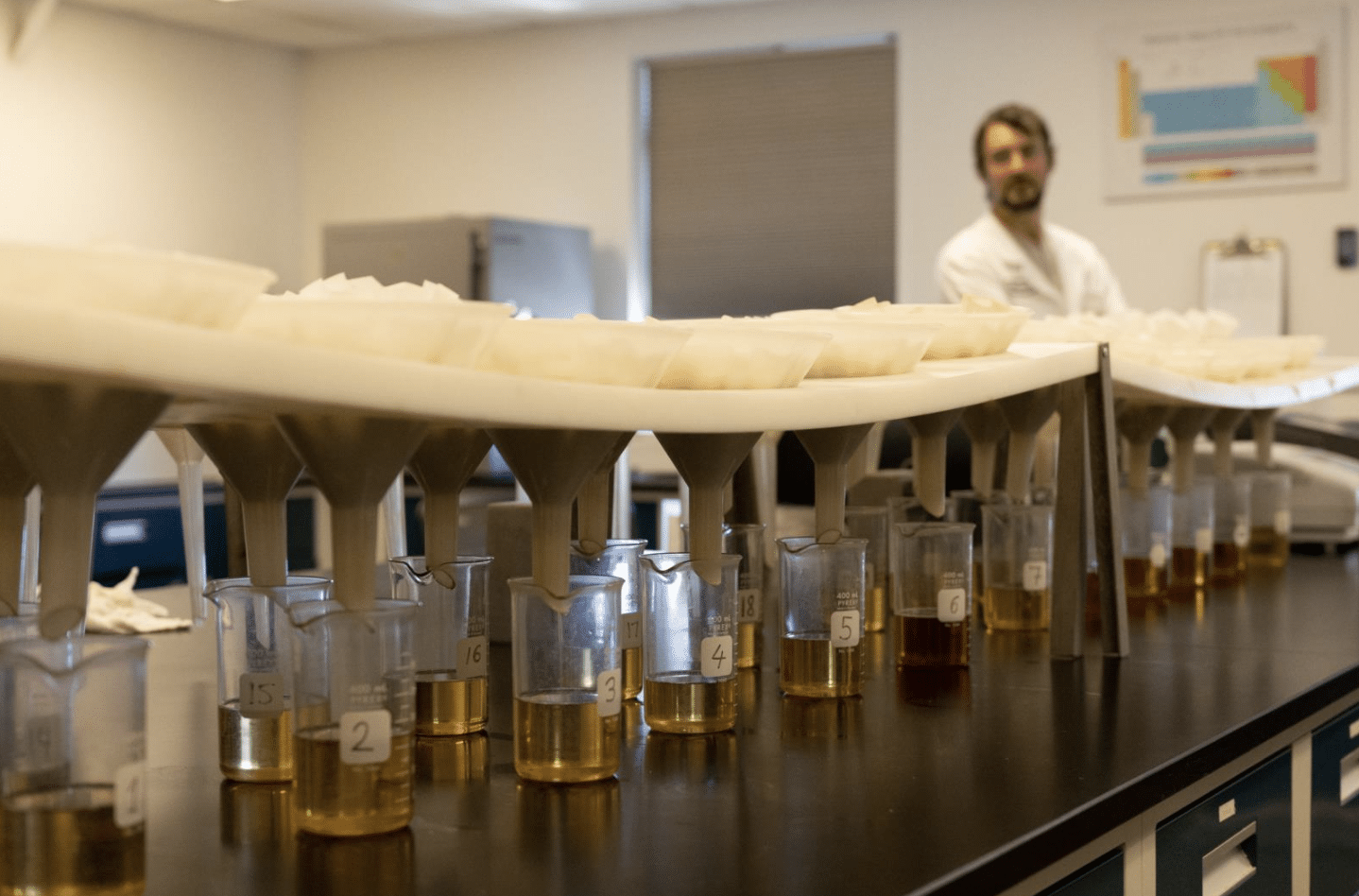
Both oddly simple and incredibly informative, the Hot Steep Method is a tried-and-true process (developed by Briess and validated by the ASBC) to create ‘miniature mashes’ that will help mimic the results of a scaled-up grist in a matter of minutes. Best of all, the initial cost for the equipment is low and easily sourced, and the procedure is relatively rudimentary. This makes it a great practice for entry-level brewers and experts alike to help ensure your product is turning out as you anticipated, turn after turn. I’ll dive into the nitty gritty on the equipment required and the procedure down below, but first, let‘s look at what we can and cannot expect out of this test.
We start by noting that the Hot Steep Method is a ‘wort–sensory’ test, similar flavor to that of your pre-boil gatherings and far from resembling the cold beers we’re cracking open on the weekends with friends. Its purpose is to evaluate things like color, aromatics, and the balance of flavors within our grist. It is not meant to guide in decision-making relative to gravity, efficiencies, mouthfeel, or sweetness (we rely on a Congress Mash for that). For most, the Hot Steep Method is used to isolate individual malts and get a better understanding of what that malt brings to the table. From here, you can develop a palette of offerings that help comprise your grist in a thoughtfully curated manner and take your recipe development to the next level. It also serves the purpose of balancing out the flavors – to make sure we aren’t stealing the show with an overly powerful roasted malt or muddying the waters with a cloyingly–sweet Munich. Using percentages, you can scale your grists down similar to your real-world application to gain an idea of how the malts will play off one another, for both flavor and aromatics, as well as color.
Not developing any new recipes? No worries, the Hot Steep Method also brings value to those with more focus on consistency and the brewers who are pumping out flagship brews day after day. Barley is an agricultural product and inherently undergoes natural fluctuation on a yearly basis. We can lean on the hot steep to set our expectations as we transition into new crop years and get ahead of any changes that might deviate us from “true to brand”. Is the higher moisture crop yielding darker colors? Perhaps a change in varietal is presenting slightly grassy flavors? These scenarios are a great application of this basic level of sensory and can help keep your brewery ahead of things and adjust as needed. By staying informed on the blend with your malt supplier and using the Hot Steep Method, you can apply some anecdotal sensory information to the data you’re presented with.
Now – let’s get into what’s required:

The Equipment / Materials:
- Scale, capable of weighting 50+ grams (± 0.1 g)
- Filter Paper (coffee filters work just fine)
- Insulated Thermos, 24oz minimum
- Tall, graduated cylinder, 500 ml
- Electric kettle, capable of heating water to 65°C/149°F with digital read-out
- Collection vessel, 600 ml
- Coffee grinder (keep separate from any other use outside of malt)
- Funnel
- Timer
- 50 grams of malt* (see note below on malt choice)
- 400ml distilled water, heated to 65°C/149°F
The Process:
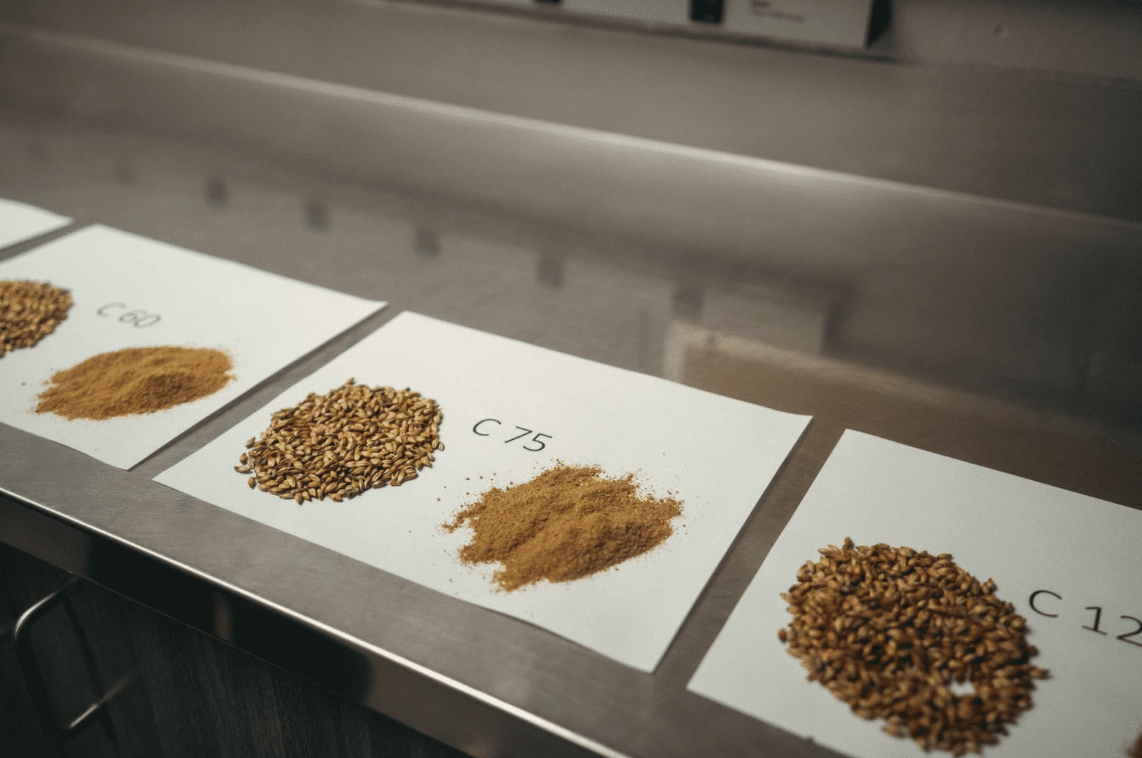
- Mill your malts to a “coarse flour”, or slightly more aggressive than your normal grist for everyday brewing application
- Combine the 50g of milled malt with 400ml of distilled water, heated to 65°C/149°F, in your thermos
- Shake thermos for 20 seconds to thoroughly mix
- Set down and let mix rest for 15 minutes
- After 15 minutes, shake again for 20 seconds. After the second shake, pour the mixture into a funnel with filter paper, set atop of 600ml collection vessel
- Collect the first 100ml worth of liquid and pour back into thermos, swirl around to clear out any remaining particulate, and repour onto grain bed.
- Continue collecting run off until 200ml of wort are collected
- Perform sensory evaluation on collected wort
As you can see, this process is straight forward and for an investment of under $100, you’re on your way to making a more thoughtful decision on those seasonal recipes or core beers coming to your line up. The one variation in the process above is dependent on the malt you’re analyzing. For a truer experience, follow these guidelines:
- For Base malts alone, use 100% in the 50 gram sample
- For lighter specialty malts, use 50% base malt and 50% the specialty malt being analyzed (25g / 25g)
- For darker specialty malts, use 85% base malt and 15% specialty malt being analyzed (42g / 8g)
Once the sample is collected, it’s important to evaluate with your designated sensory panelists using a standardized format to make the most of the information you’re gathering. It’s best to run tests within 4 hours of the hot steep, providing and sticking to an established ‘Lexicon’ amongst your group so that you’re all using similar descriptors when tasting. (While it’s great that the honey malt might taste like your grandmothers’ cookies, I have never had the luxury of having them, unfortunately – thus that feedback wouldn’t be valuable to me.) Also, be sure to have your panelists keep their thoughts to themselves for the first few moments, writing them down instead of shouting them out, before sharing with the group. The power of persuasion is a real thing, and sharing sensory information out loud can sway decision-making for others while evaluating, skewing the results. At the end of the day, the goal is to establish a few key descriptors of the malts and lean on those down the road when formulating your beers.
I’ll be honest – it wasn’t until later in my brewing career that I truly understood the value of the Hot Steep Method. And I’m not here to act like I was some perfect brewer who carefully analyzed every step and never made mistakes. Trust me, I made plenty! There were IPAs that were so sweet they could’ve passed for Scotch Ales, and Stouts that ended up tasting more like a cigar lounge than a beer. But those missteps in recipe creation are what ultimately helped me appreciate processes like this one. With the brewing world getting more competitive every day and the standards constantly rising, I hope you can use this insight to craft your next standout recipe!
About the Author
Currently residing in Troy, NY, Patrick is the New England Territory Manager for Country Malt and covers CT/NH/VT/RI/MA/ME. He has been brewing for the last ten years, majority of that in the role as head brewer for some regional Hudson Valley breweries (Keegan Ales, Crossroads). His background is in production brewing, with a fiscal mindset and a strong focus on efficiencies throughout the brewhouse! If Patrick is not working the territory, he can typically be found drinking a lager in his backyard with his dogs Frank and Ellie.
Cheers,
Country Malt Group