PODCAST GUESTS
Hubertine Underberg-Ruder
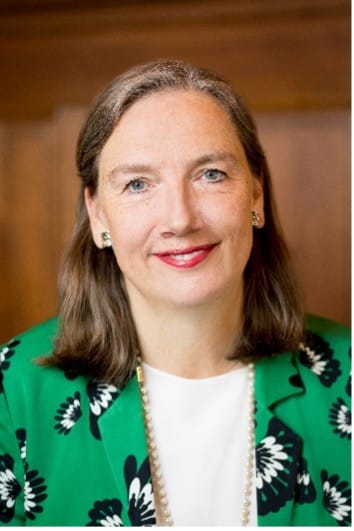 Hubertine Underberg-Ruder is President of the Board of Underberg AG, the Swiss mother company of the Family Enterprise founded in 1846 by Hubert Underberg her great-great-grandfather. Underberg-Ruder is also President of Supervisory Board of Gurktaler AG, listed in Vienna and Zwack Unicum Nyrt listed in Budapest. She is also Member of the Supervisory or Advisory Boards of the German Underberg group.
Outside of the Underberg group she is Vice-President of the Owners Committee of NIM Nuremberg Institute for Market Decisions (founder of GfK) and Member of the Advisory Board of Departments of Economics of Zurich University and of the General Assembly and the International Business Committee of the regional Chamber of Commerce.
Hubertine Underberg-Ruder is a microbiologist with a Ph.D.in science. 1991 she concluded her research work for the Royal Dutch Ministry of agriculture and fisheries. Then, she started to work for the family enterprise based in Dietlikon / Zurich, Switzerland. She is married to Dr. Franz J. Ruder, Director of Underberg AG. The couple has four grown-up children and is living in Switzerland.
For many years Hubertine Underberg-Ruder is engaged in environmental, scientific as well as Christian projects. So, she is Vice-President of FUST-Tirol (www.fust.at) an environmental common benefit organisation founded as early as 1970 and active in the Swiss based “Foundation for the international Conservation of Biodiversity” (www.kraeuterabc.de) founded in 1989. Also, she is involved in the German University Foundation (www.deutsche-universitaetsstiftung.de) mentoring educational student projects and the Christian AFOS-Trust (www.afos-stiftung.de) active in Africa and Latin America.
Next to a good book she enjoys open water swimming, biking, jogging and various winter sports – and her large family.
MORE EPISODES
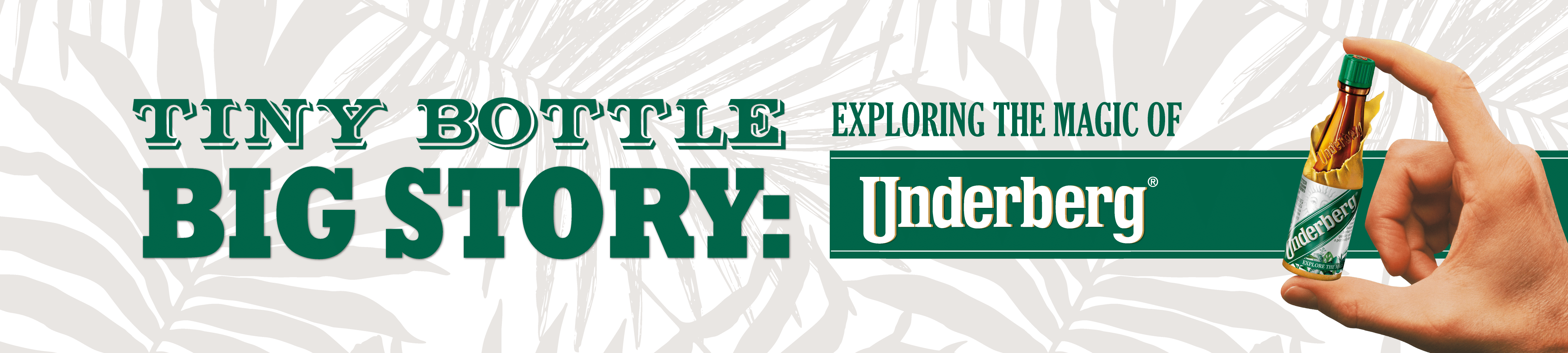
SEASON 7, EPISODE 2: TINY BOTTLE, BIG STORY: EXPLORING THE MAGIC OF UNDERBERG
PODCAST HOSTS:
HEATHER JERRED – TERRITORY MANAGER, COUNTRY MALT GROUP
BRITTANY DRENNAN – TERRITORY MANAGER, COUNTRY MALT GROUP
PODCAST GUESTS:
HUBERTINE UNDERBERG-RUDER – PRESIDENT OF THE BOARD OF UNDERBERG AG
Key Points From This Episode:
This Brew Deck podcast episode with Hubertine Underberg-Ruder offers a captivating insight into the world of Underberg and its rich history. From its innovative production methods to its steadfast commitment to quality, the Underberg brand stands as a testament to what can be achieved through dedication, passion, and family values. As Hubertine and her family lead the company into the future, they remain grounded in the principles that have defined Underberg for over a century and a half.
Key Takeaways:
1. Underberg has been a family-owned enterprise since 1846, now in its fifth generation.
2. The “43, 44, 45, 46 rule” is a unique way to remember how to enjoy Underberg.
3. The motto “Semper Idem” reflects the brand’s commitment to quality and consistency.
4. Underberg combines tradition with innovation to stay relevant in the modern market.
Transcript - TINY BOTTLE, BIG STORY: EXPLORING THE MAGIC OF UNDERBERG
EPISODE S.7, E.2
[TINY BOTTLE, BIG STORY: EXPLORING THE MAGIC OF UNDERBERG]
Heather (00:09)
Welcome back to a very special mini-sode of the Brew Deck podcast. We are your hosts. I am Heather Jarrett and I am joined by Brittany Drennan. Good morning, Brittany.
Brittany (00:19)
Morning!
Heather (00:20)
And we are incredibly honored today to be joined by the president of the board of Underberg AG, Hubertine Underberg-Rudder. Welcome, Hubertine.
Brittany (00:29)
Welcome! ⁓
Hubertine Underberg-Ruder (00:30)
Thank you.
Thanks for having me. Thanks for inviting me.
Heather (00:33)
we’re so excited to have you today. Obviously, think anybody listening knows what Underberg is. You have like such a following, especially here in North America. But can you introduce yourself a little bit to the people?
Hubertine Underberg-Ruder (00:46)
Yeah, Underberg is a family enterprise and our main product is the Underberg Herbal Digestive, which is produced since the foundation of the House of Underberg in 1846. So that means for people who can already calculate very well, at this very moment ⁓ we have our 180th anniversary coming up.
this June.
Brittany (01:15)
Incredible.
Heather (01:17)
And it was started by your family, correct?
Hubertine Underberg-Ruder (01:17)
And what’s even more interesting is that actually for such a long period of time, I am only the fifth generation. So that’s quite remarkable too. And ⁓ so that is also an interesting part. Today, we run the business, my husband and myself, together with our eldest son Ludwig, he is 34.
and ⁓ he joined the business as vice president of the international and the German board two years ago. And this young gentleman has lived for two years in the United States, two years ago, till four years ago. Yes. He was located for those two years in Manhattan. He was in consulting and yes.
Brittany (01:53)
Amazing. ⁓
Heather (02:02)
Whereabouts is he located, do you mind me asking?
Brittany (02:09)
Wow.
Heather (02:11)
I love me some Manhattan. But we should get them up to CBC in Philadelphia this year.
Brittany (02:11)
Very cool.
Hubertine Underberg-Ruder (02:13)
Yes, and he loved it.
Brittany (02:19)
always welcome. More than merrier.
Heather (02:20)
Yeah.
So we touched a bit on how old Underberg is. Can you give us a little bit more into the background? What exactly, you kind of gave us like a little bit of a history deck before you came on and I read about the 43, 44, 45, 46 rule.
Hubertine Underberg-Ruder (02:25)
Yes.
Yes, we always say and actually it was invented in America, the 43, 44, 45 and 46 rule. It was invented by our long term director of the sales corporation. And he the it is the shortest explanation based on four figures and it can be done in one sentence and the sentence is.
herbs from 43 countries carefully extracted in 44 % alcohol.
consumed at an angle of 45 degrees grants digestion since 1846.
Heather (03:21)
you
Brittany (03:30)
Hey,
Heather (03:30)
it. I will have to say that’s
Brittany (03:31)
yeah, that’s amazing.
Heather (03:32)
where I learned about the 45 degree. I was like, I feel like I maybe have been doing it wrong. I think I over tip. Yeah, now we know.
Brittany (03:37)
I think everybody watching and listening, yeah, they go too tall.
Hubertine Underberg-Ruder (03:38)
Hahaha
No, but
is important, by the way. And it is not the neglectable figure, the 45, that you can omit. No, not at all, because the mouth of the underback bottle is so narrow that if you over-tip it, the liquid will not come out as there is no
for the air to come in.
Heather (04:06)
come through.
Brittany (04:07)
I’ve seen
some questionable ⁓ methods of getting the liquid out of the small cap. I’ve seen some people do like a hurricane type thing. I’ve seen people do like a trying to get it out like a bitters bottle. ⁓ But yeah, the 45 degrees seems too obvious.
Heather (04:13)
This is heavy tapping.
45 degree.
Hubertine Underberg-Ruder (04:27)
⁓ On
the other hand, have to say it is an indication. But what we do not want to do is this wonderful little bottle makes people get creative themselves about it, create their own rituals, create their own personal approach to the product. And of course,
We do not want to limit it. If somebody wants to make some kind of whatever with it, don’t stop them. And no, but ⁓ some barkeepers, for example, they go and use it like dashes. ⁓ yeah, exactly. So I would, it is a rule. It’s something what makes life maybe easier.
Brittany (05:03)
Fair.
Heather (05:12)
Also like a bitters dash, yeah.
Hubertine Underberg-Ruder (05:20)
but you shouldn’t overstretch it to limit the creativity of our wonderful consumers, yes.
Heather (05:28)
I feel like we might be correcting people though. Like no no no.
Brittany (05:31)
Did you know? It’s just a learning opportunity, I think.
Heather (05:35)
Yeah, it
is. I love this for us.
Hubertine Underberg-Ruder (05:37)
Sort of.
Brittany (05:38)
⁓ Okay, what we’ve seen in, I don’t know if we saw this or read this or heard this, but there’s a sumper edem. Can you talk about what that is or not talk about what that is?
Hubertine Underberg-Ruder (05:49)
Yes, Yes, ⁓
Heather (05:50)
It’s secret, but it’s so
what you can tell us about the secrets.
Brittany (06:12)
You
Hubertine Underberg-Ruder (06:17)
common language of people was not like today English, it was Latin. And so, ⁓ and the, like there were also other languages, but mainly especially in the diplomatic environment, it was French. In the region where Unterbach was founded on the lower Rhine of Germany, we had,
many years of French occupation in the history since Jesus Christ was born. And so the founder was not so fond of putting any French on the bottle. And so to use some kind of an international understandable slogan on what Unterbarg is about, he used then the other international language and at that time it was Latin. So Semper Idem is Latin and the Latin meaning is
Brittany (06:45)
you
you
Hubertine Underberg-Ruder (07:09)
always
the same. And the background of this for him was always the same in quality and effect. He was looking for digestive action that this wonderful herbs have, and he wanted to standardize it. And this is why highest quality was for him the target of everything. so Semper Idem for him was a guarantee
Heather (07:18)
I like that. Yeah.
Brittany (07:18)
okay.
Hubertine Underberg-Ruder (07:36)
that I mean, if you look on the Unaback bottle, you see here the signature of the founder. So he gave his signature, he gave his quality assurance with the word Semper Idem, always the same in quality and effect. He gave to them saying ⁓ that this motto is the measuring stick to which he will always look when producing Unaback.
Brittany (07:52)
you
Hubertine Underberg-Ruder (08:03)
Also me being the fifth and our son being the sixth generation, we do it in this respect the same. Of course, we have always modernized the product, the liquid, the ripening process, the extraction, even the composition of the herbs, the degree of alcohol. Already the founder, he was a very innovative man. He founded the company when he was only 23 years old.
⁓ and he founded it together with his wife. And because of that, she was the business angel, we would say in today’s wording. She gave the capital and he had the wonderful activities, ideas and how to market it. They were really a very interesting couple on eye level in those days when we women didn’t even have the election rights.
Brittany (08:53)
Mm.
Hubertine Underberg-Ruder (08:54)
Yeah, the election rights in Germany were only established in 1918 and he invented Unterberg in 1846, so many years, so two generations earlier. And I think it’s quite remarkable in 1846, there was not even any Germany.
Brittany (09:05)
you
Hubertine Underberg-Ruder (09:14)
It was before, today’s Germany was only constituted in 1871 after the war against the French. So it was a time with, yeah, exactly. And this is what I think is quite remarkable. so it is, in the middle of the 1848 revolution, he started his business in shaky times, together with his wife, he…
Heather (09:15)
Thank you.
Brittany (09:25)
Wow.
Heather (09:28)
Yeah.
Hubertine Underberg-Ruder (09:40)
They were a good team. They really had this entrepreneurial spirit. And this is why he also always optimized in every moment the product. And so we are amongst the very few who don’t say, ⁓ produced after an old recipe from, no, yes. And we know all the old recipe, but we also know how tough he worked to have up to date every part of the process from the buying, from the field all the way to the bottle.
Brittany (10:10)
Incredible.
Heather (10:10)
So everything
has kind of evolved over time except for that recipe.
Hubertine Underberg-Ruder (10:13)
Yes, and
of course, if we find that from two possible herbs, one is ⁓ much better for the purpose than we would exchange it. also he worked in detail, you cannot believe, he worked also on the maturation of Unaberg. Unaberg is matured for more than six months, in average nine months.
I always say like a baby. It’s also an average. In casks, in wooden casks of Slovenian oak. And we know that he did a lot of testing about the different type of oaks and he explicitly chose no German oak, but from Slovenia, which is on those steep mountains all the way from the Alpine mountains.
Heather (10:43)
You
Hubertine Underberg-Ruder (11:07)
down to the Mediterranean Sea. They are extremely stressed trees because of the temperature, because of the steepness of the environment and everything. And thus the ⁓ wood is very resilient and the pores are, because it grows so slow, the pores are very little. And so they have a very high catalytic surface and do an
extremely wonderful maturation job and this is what we use for Unaberg until today.
Heather (11:39)
I didn’t know that
at all.
Brittany (11:41)
had no idea. That’s
Hubertine Underberg-Ruder (11:42)
you
Brittany (11:43)
really, really
fascinating.
Hubertine Underberg-Ruder (11:44)
Yes.
Heather (11:44)
So
I don’t want you to get into specifics because I know that you can’t, but can you talk a little bit about the sourcing of the ingredients without giving…
Hubertine Underberg-Ruder (11:53)
Yes, I mean,
what we already touched with the 43, 44, 45, and the 6 rule is that the herbs come from 43 countries. The buying of the herbs is done by the family, in this case by me. So it’s a part of my set of duties.
Heather (11:57)
44 different.
I’m
Hubertine Underberg-Ruder (12:14)
buy usually through high-end ⁓ expert traders, mainly also herbal traders, mainly also family enterprises. Most of them we work together with for generations. These are people who share our values, who give us transparency right to the individual field where
the herbs are grown and you need it because I mean there’s two ingredients I can talk about because they are disclosed and the one is sweet root, licorice root and the other one is ⁓ a Gensian root. ⁓ For example, let’s stay for one minute with the Gensian root until you can harvest it.
It has to grow for 10 years.
Heather (13:10)
So even longer than Hobbs.
Brittany (13:10)
my gosh.
Hubertine Underberg-Ruder (13:11)
And yes, no, what
I want to show to you with some of these kind of examples is how ⁓ careful you have to be with things, how careful you have to look after nature on the one side, but also how careful you have to be with your relationships to your partners, be it the herbal trader or be it the farmer.
If you give not trust to him or her ⁓ in that you will be interested to buy Gensian root also tomorrow and in eight, nine, 10 years, why should he have a field of and why should he designate a certain acreage to it? That doesn’t, wouldn’t make sense. So the whole under back is not only based on a broad biodiversity.
And we do a lot of our environmental projects in that field in our house already also for generations. But it is also built on trust because to grow herbs also some herbs, about which I cannot speak, they are bark. The piece is not ⁓ a leaf or a ⁓ berry, but some of them are barks and you need a tree for it.
Heather (14:21)
you
Hubertine Underberg-Ruder (14:32)
And so things need time, things need supervision. And Unaback is constituted mainly or mostly or almost 100 % by organic herbs. So whenever I can buy organic herbs, I do. And ⁓ to certify anything organic, you need to have a three year history before you are allowed to call it organic.
So three years of monitoring of the respective field or place before you can market it as an organic botanic.
Heather (15:08)
So we sell a lot of malt. That’s a big thing about Brittany and I do. ⁓ And I also live in like on the Canadian, by the Canadian prairies. So we have bad crop years. So have you guys ever had a year where you’ve had a bad crop year for one of your ingredients and it’s been like a struggle to source the ingredient?
Hubertine Underberg-Ruder (15:26)
Yes, we have this, we have, mean, like I started to do the herbal buying in the mid 1990s, the first years together with my mother. And then later on by myself, my mother ⁓ is 85 and I think it’s good that she deserves a little rest. ⁓ But ⁓
Heather (15:47)
Sit down now.
Brittany (15:49)
you
Hubertine Underberg-Ruder (15:53)
When I started and even more so in the time of my grandmother who also did the herbal sourcing, ⁓ we had a lot of herbs which we could only source from one country in the world. Today, if we speak with our suppliers, ⁓ we can use almost for every herb two or three origins.
Brittany (16:05)
Well.
Hubertine Underberg-Ruder (16:18)
So if in one region of the world there is some kind of a misharvest or any problem, fire of the stock or whatever can happen, and we try to balance this kind of things properly out by proper planning. And so in the time that I’m now doing it, it’s a little bit one week more than 35 years. I just had a Jubilee, so to speak, a little one, but still.
Brittany (16:41)
Ha ha ha ha.
Hubertine Underberg-Ruder (16:45)
So whenever I have devoted a lot of time to this risk herbs and what we can do to reduce the risks and the most probable measure is to look to find a second world region similar in climate, similar in soil, where this herb could also come.
Heather (17:06)
Makes sense.
Hubertine Underberg-Ruder (17:07)
But
it is a lot of work and it is quite tricky, And I know, of course, malt is something also very wonderful. And I have visited in, of course, my industry career, many malting places because ⁓ we also sell products outside of our own. For example, also American and ⁓ Scottish whiskey. And of course, also their malt is a big.
Heather (17:10)
Yeah.
Brittany (17:13)
you
Hubertine Underberg-Ruder (17:36)
a theme and I know how difficult it is sometimes when you have a bad harvest.
Brittany (17:43)
I think also global politics can play into the availability of some things times too. So it’s, there’s a lot of factors that go into it. We do malt obviously in hops too, and that’s similar to wine where you just come at the mercy of what happens with the weather.
Heather (17:49)
Okay.
Hubertine Underberg-Ruder (17:59)
Yes,
especially with the hop, I know that it is a big problem. My husband comes from a brewing family. They have three breweries in their family. one of them is the German market leader for ⁓ organic beer. And his cousin, Franz, also Franz, they both are called Franz, my husband and also the cousin.
It took him 11 years to make it all possible to have organic hop. But once he had it, they also had big ups and downs depending on the planet.
Heather (18:38)
Yeah.
Brittany (18:40)
Do we want to maybe switch gears and talk about?
here in North America, I would just ask you, are you surprised by…
Big this following has gotten here.
Hubertine Underberg-Ruder (18:52)
In a way, I am surprised in a way. Yes. I mean, what is so wonderful about the people in the United States is really their way, how they can be emotionally enthusiastic. mean, I think the Europeans could really learn from it, how to be really going.
Heather (18:52)
You
That’s true.
Brittany (19:11)
you
Hubertine Underberg-Ruder (19:16)
for something being enthusiastic, being emotionally involved. I mean, it is really, really, really admirable. And this is what always, I don’t know whether surprise is the best word for it, but I’m not a native speaker, so maybe I do not even know the right word that would be suited the best. But I think that’s really, mean, like when I come to the US, like,
Brittany (19:31)
you
Hubertine Underberg-Ruder (19:44)
last summer when we visited ⁓ California and ⁓ Seattle. Then we really had the idea that ⁓ we would never forget all the moments when we met this really fans of our brand being overwhelmingly warm and welcoming us our
product, I mean it was really, I will never forget. Yes. ⁓
Heather (20:17)
So I will admit
I am Canadian, which is not a sin. Underberg was, it’s getting more popular here, but it’s definitely not as popular as it is down in the US. And I was at an event in Nashville for the Craft Brewers Conference and they passed out Underbergs to everybody. So was the first one I ever had. And I took off the cap and I drank it. And then I went to go put the cap in the garbage can and I got…
yell that. Can you talk a little bit about the loyalty program and the caps?
Brittany (20:43)
Roasted.
do that.
Hubertine Underberg-Ruder (20:51)
Yes, absolutely. No, it is really interesting.
After, after, I mean like, Unaback goes back in the US many, many, many years. It is as early as the 1860s. 1860s. Since then Unaback is marketed in the United States, but it was always a very, very narrow niche until in the mid 90s, my husband and Martin Bickner, the general manager at the time,
they were visiting the so-called fine food shows. It was a real movement at that moment in the States. And in one way or another, the whole craft beer movement took its roots from this kind of new look into ingredients of drinks and food. And we found it extremely inspiring because before we had the…
feeling that there were more or less in whole North America for beers, not more. And the interest in what is in it and how it tastes was very limited. So when we look at the, let’s say, at the development of Unaback in the today’s world, this has totally changed people in…
the United States, as I just said, they are enthusiastic about the product. They’re enthusiastic to know also a lot of the beers and so on. And then we learned very much that the bitter taste, the hop, we were just discussing about the hop in the craft beer, which has a higher hop content than the standard beers, the big four that we had already in the 90s, that this has made
easier to accept and easier to understand the bitterness of Unaback. mean, Unaback contains no sugar and this is one of our USP. I mean, like there is no other herbal digestive herbal liquor, no herbal that does not have any sugar. No sugar color, no nothing. Unaback has herbs, alcohol, water, full stop. So that is a total different story. ⁓
So once a consumer learns, be it in the environment of wonderful craft beer or just in general, learns about the advantages of Unaberg that it does not need to be so sweet, that it is wonderful if also the bitter palate ⁓ is developed.
then the people really become to be loyal consumers. And now going back to the caps, these loyal consumers are then really loyal. They collect crazy numbers of caps and we reward this caps with premiums, very crazy premiums. example, we have a, I show it to you. We have a bottle which is a dog toy. Show it to you.
Heather (23:37)
Yeah.
Hubertine Underberg-Ruder (23:56)
Yeah, so we have a lot of things. Yes, and we have the, I have it behind me here somewhere. show the other. The most, the two top premiums, the two top premiums, I’ll show them both to you is the glass.
Heather (23:57)
Good news. Can’t eat five of those.
Brittany (23:58)
Cute!
Heather (24:17)
yeah. Yeah.
Brittany (24:17)
Yes, it’s beautiful.
Hubertine Underberg-Ruder (24:19)
hand blown and the truck.
Brittany (24:19)
and the drug.
Heather (24:22)
never seen the truck before.
Brittany (24:24)
you haven’t? my gosh.
Heather (24:25)
No.
Brittany (24:26)
I have customers that know exactly how many caps away they are from getting the truck because the truck is very important as a visual on their bar top behind to sell the product even more so they can keep collecting more caps.
Heather (24:31)
Wow.
Hubertine Underberg-Ruder (24:32)
No!
Yes.
Heather (24:44)
I love that.
Hubertine Underberg-Ruder (24:44)
Yeah, even have
a, speaking about Canadians, Heather, I mean, I worked for one year in Canada in Vancouver, the interior of Vancouver and the, excuse me. yeah, okay. And so ⁓ my, let’s say family in Vancouver with who I lived for that very year.
Heather (24:55)
That’s where I live. That’s where I live in Vancouver. Yeah.
Hubertine Underberg-Ruder (25:12)
and we are still together and friends. ⁓ the mother of the family today, she just celebrated on Christmas Eve, her 90th birthday. She even decorates her flowers in the truck. And this is why I say the Unaback fans, are really creative. This is something that makes
Brittany (25:28)
cute! I love that!
Hubertine Underberg-Ruder (25:40)
them special and in a way I think it’s a good correspondence to the specialty of Wunderberg as such. And so the CAP collection program, the loyalty program, Topps & More is really ⁓ a part of our brand’s DNA because it is one fantastic way to be in a direct dialogue with our consumers.
Brittany (26:05)
I’ve seen how the brand elevates, would call them artists. I’ve seen people make dresses and clothes and artwork and all kinds of just amazing creative ways to utilize those caps. It’s just unbelievable.
Hubertine Underberg-Ruder (26:24)
Yes, and I tell you, example, I mean, like speaking of men, now we are here with three women, but let’s take ⁓ also an embracement to the men. ⁓ The Undermark truck gets regularly tuned. That’s also something. then, of course, because we are in dialogue with our consumers, they send pictures of what
Brittany (26:30)
I’m
Hubertine Underberg-Ruder (26:51)
crazy, let’s say big spoilers they have put and so on. It’s really fantastic. We have one vitrine in the founders house in Rheinberg, the place where Unaback was started, where we exhibit some kind of those things that they have been sending to us. So, I mean, like we really value this and we really celebrate this in a… ⁓
a demonstrative way how crazy you can be and how wonderful it can look.
Brittany (27:29)
Can you tell us the significance of the flying machines in the marketing and advertising?
Heather (27:34)
Yeah.
Hubertine Underberg-Ruder (27:36)
Yes, of course I can. But how to do it the best? I try, I try. As I told you before, when Unterwerp was founded, yes, we are 180 years old in June, yes, but we are always striving to be up to date, to be…
Brittany (27:38)
Okay.
Heather (27:39)
you
Brittany (27:42)
Okay.
Hubertine Underberg-Ruder (27:55)
good dialogue with things happening today and trying to anticipate what will happen tomorrow. So in that spirit, I mean, this is what also my son, my husband and myself, what we are trying to really also live together with all our employees in our team that to be 180 years old doesn’t have to do anything with looking to the yesterday. No, it is our obligation to really be with the DNA of this young entrepreneurial
guy, Hubert Unterberg, who in the middle of a revolution started a business together on eye level with his wife. I mean, how crazy is this? And this is the spirit I think we have to measure our today’s work on. So that means we have to keep the spirit more and be innovative also today. And it’s not my invention or my intention to do this, but also my grandfather.
and his two brothers who ran the business in the third generation had this exact same attitude. They said, we want to show that we are just as innovative as the founder has been, same as my son and I am not doing it. And so the outcome of the whole thing was that when, of course, then this flying machines arose, the Unaback said, hey, we use it for branding. yes, I mean, like it was this kind of
Heather (29:13)
That’s up and for all!
Hubertine Underberg-Ruder (29:19)
entrepreneurial spirit condensed in a flying machine. so there they were nine boys and in the third generation, there were nine boys and three girls, 12 children.
Heather (29:35)
Tiny family.
Hubertine Underberg-Ruder (29:37)
And in the last week of World War I, the eldest son died in France being an officer. And so after he could not take over because he was dead, three of his brothers took over, amongst which one was my grandfather. And there was a fourth boy.
⁓ emigrated after a trip around the world to Brazil, to Rio de Janeiro, and he emigrated using a zeppelin from the lake of Constance, who started in the lake of Constance and who was the first scheduled non-stop flight to Recife and from Recife to Rio de Janeiro. The trip ⁓
Heather (30:27)
crazy
Brittany (30:28)
Wow.
Hubertine Underberg-Ruder (30:29)
two and a half days. If you ever come to Germany, it’s a nice place to visit this zeppelin museum in Friedrichshafen on the Lake of Constance. But I think all these environmental things, having this ⁓ zeppelin ⁓ construction site in Germany, seeing all these entrepreneurial gentlemen doing this Graf Zeppelin, this Count Zeppelin,
who invented it and he became a count later on because he did it. I mean, was, he was rewarded. This title was not inherited. And so all this kind of approach, I think made them decide that a blimp would be a wonderful thing, that a helicopter would be wonderful, that a balloon would be a good way to transport the message of the brand.
Heather (31:25)
I love it. That’s so fun. Can we jump a little bit to talk about the packaging? Has it always been in the same bottle with the brown paper or has it changed over time?
Hubertine Underberg-Ruder (31:39)
It has always been in a brown bottle and it has always been packed in paper in this very specific, straw made from straw paper. Yes, this is ⁓ unchanged. And the reason for it was that in those days for the transport, for the logistical trips also to the US since the 1860s,
Heather (31:49)
Mm-hmm.
Hubertine Underberg-Ruder (32:05)
⁓ you packed it in paper first, mostly old newspaper, and then you put some ⁓ chipped wood between to protect it, and then you put it in a wooden transport box, and then it was put on a boat and shipped to the United States. But also when it was put on a horse carriage, it was packed more or less the same way.
Brittany (32:17)
you
Hubertine Underberg-Ruder (32:32)
But when then the merchant reordered it and sent it to the pub, usually there was, let’s say, two bottles of Underberg, one bottle of Geneva, one bottle of something else. Then the pub owner had to unpack everything before he could put it in the shelf. And unless he, otherwise he couldn’t see. And then in the shelf, it would be dusty again.
So the founder tried to solve and he saw that ⁓ for me it’s a wonderful sign of how consumer oriented the founder was because he solved the problem that the pub owner would have on the shelf. He facilitated for the merchant that he didn’t have to put it and wrap it in the old newspapers. And he prevented that Unerwerk was packed in the, let’s say, ⁓
Heather (33:06)
Yeah.
Hubertine Underberg-Ruder (33:25)
news about who died and the fish prices. So, no, but it was also of course a question of branding. He put the label outside and so even not unpacked, could, the bottle could be identified and found. And it would not be dusty once brought from the cellar of the pub up in the dining room or at
So that was basically the idea. What was not from the beginning is the size of the bottle. In the first two generations, we had all varying bottle sizes from big to small. ⁓ In ounces, in pints, in liters, in metric, in everything. Exactly. But in those days, of course, the metric was also in Europe. ⁓
Heather (34:11)
All right.
Hubertine Underberg-Ruder (34:21)
used parallel to a lot of other measures. And the standardization commission took only place after World War I. And during World War II, mean in both World Wars, we could not produce because the availability of the herbs from 43 countries was not given and it was for us to be debated on the quality to not produce if you cannot have the proper ingredients.
Brittany (34:49)
you
Hubertine Underberg-Ruder (34:49)
So that
was basically this and because of the high standard also, Unterberg had a higher price than all the copycats who tried to ride on the wave of the success that the founder had already only very little time after he started the business. In his time alone in Rheinberg, there were more than 50 companies who copied Unterberg. Yes.
Brittany (35:16)
my gosh.
Hubertine Underberg-Ruder (35:17)
Yes, this problem did not, ⁓ I mean there was no protection of intellectual properties at that time. That was not yet invented, that was not yet gone, had not yet gone through Parliament. And ⁓ so the problem of the copycats, the imitators, ⁓
Brittany (35:25)
Wow.
Hubertine Underberg-Ruder (35:41)
It was a big problem throughout all generations. And the end of the story then was that my in World War II, my grandfather, one of those three in the third generation, he had the idea to put it in this, let’s say, ampulla type. He got inspired, also family company, Böhringer in the pharmaceutical industry. They had to have for the…
for the operation for the hospitals, the army hospitals in World War II, they produced the different ingredients in little ampulla bottles like this. And when my grandfather visited their production plant, which of course was producing in three shifts during the war, when he visited it, then…
He got inspired and had the idea why don’t we for the originality of Underberg and that no copycat can do anything to us. Why don’t we sell Underberg in the right portion in one portion in original packaging? That was the slogan used.
Brittany (36:46)
That’s incredible. What a rich, rich history.
Hubertine Underberg-Ruder (36:50)
Yeah, well, years, a lot of things can happen.
Brittany (36:53)
I mean,
fair.
Heather (36:55)
So I guess, yeah, we’re hitting 180 years. So what’s next? Is there any other markets you’re looking into? ⁓ Anything you want to tease? We don’t want to. Yeah.
Hubertine Underberg-Ruder (37:00)
Yeah.
Brittany (37:06)
Special releases, country releases, or anything
you want the listeners to know about the brand.
Hubertine Underberg-Ruder (37:10)
Yes,
I mean, I think in the US we are still a very small little ⁓ plant, little tree, little something. No, I mean, I think we have a wonderful ⁓ step. We have arrived in the States, but it is still in the status nascendi in the birth state.
We can do much more, think. And one of the big things I think, and this is why I was really honored and also at the same time, very happy when you asked me to come into this podcast, because we want to do focused on the United States a lot more things. We think it is such a wonderful country. has the United States also have an incredible broad, rich.
culture of different people living together, inventing every day new things, being so enthusiastic and so emotionally open to things that we think that this could be ⁓ really something we would like to further grow. And my husband and myself, I I have lived that one year in Canada, so I know the Northern America better than the United States.
My husband has studied in North Carolina, but he is Bavarian and we live in Switzerland. I think, and also our son, as mentioned, has lived in the US for two years. I think it’s also important, if you want to grow something, it has to be a two-way road. We have to love it and they have to love us. We have to be in a connection with each other.
And this two-way road is, I think, something we would like to build further, which we like to do, which comes from our heart, and we are really trying to understand the market every day better. And this is why in the last summer we have stayed the time as well, also in Vancouver, but also Seattle and different spots in California.
So I think this is, we are not a big international company, we are a small family owned company. We have a long history, we have a rich history, but we think that it is good if we can grow it organically.
Brittany (39:50)
Thanks.
Hubertine Underberg-Ruder (39:51)
grow it together
with our consumers, build also on their experience, on their creativity. We have been discussing about how creative they are. And I think that this will be a very solid foundation for future developments. Yes.
Heather (40:07)
I would say you’ve a pretty good foundation.
Brittany (40:07)
I think.
Yeah,
I was going to say my takeaway from the brand specifically, especially being here in Texas, it’s very, very popular within the brewing community. And the one takeaway that I have is that it fosters community and everybody comes together to drink this beverage together in
Hubertine Underberg-Ruder (40:10)
I’m sorry.
Brittany (40:32)
almost a celebration and it’s just so heartwarming to see everybody coming together to do one thing. ⁓ And yeah, just bringing the community together I think is just a wonderful, wonderful thing.
Heather (40:45)
We always have it at our booth and if people come and they ask if they can have one, like yeah, absolutely, they always ask if you’ll do it with them. Will you do one with us? Yes, I can. My new friend. Yes.
Hubertine Underberg-Ruder (40:45)
Yes.
Brittany (40:51)
We’re like, let’s go. As long as you give me the caps.
Hubertine Underberg-Ruder (40:53)
Yeah,
that’s really super, super, super now. I think it is ⁓ something that this packaging, this ingredients, everything really foster this uniqueness and this creativity. And it offers so many different
ways of getting in touch, of being together, that everybody can have also their own celebration rules and ⁓ plays and games and rituals and everything. And that is really, it’s also inspiring us very much.
Heather (41:37)
Awesome. Well, Obertine, thank you so much for joining us today. Tonight, I know it’s in the evening your time. We really, really appreciate you taking the time to tell us a little bit more about Underberg. I feel like I learned so much today. It was absolutely amazing to get to meet you.
Hubertine Underberg-Ruder (41:44)
Yes.
Brittany (41:50)
incredible.
Hubertine Underberg-Ruder (41:50)
Thank
Yes, that’s wonderful.
Brittany (41:52)
Thank you so much.
Heather (41:54)
And if you’re ever
in the area again, let me know.
Hubertine Underberg-Ruder (41:57)
Yeah, that
is very, very likely. And I would like to say thank you also to the whole audience. It was great that I had the opportunity to tell a little bit about what we are doing there in this crazy Europe ⁓ and that we really like ⁓ how we have been received by the United States consumer.
Brittany (42:18)
Thank you so much.
Hubertine Underberg-Ruder (42:19)
Yeah, thank you so much.
MORE EPISODES