PODCAST GUESTS
Jen O'Brien - Montana Craft Malt
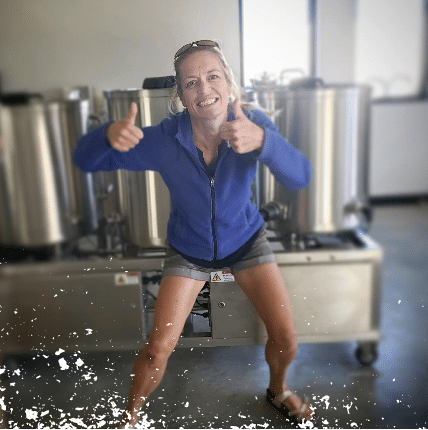 Jen O’Brien is a Montana native with deep ties to agriculture. She joined Montana Craft Malt to continue the legacy of her father, Ron Ueland, who founded the company. Jen has extensive professional experience in business analysis, sales operations, business development, and brand strategy. She graduated from the University of Washington with a degree in accounting and an emphasis in marketing. She began her career as a business analyst at The Washington Post from 2000 to 2003, followed by nearly a decade at Google, where she worked in global sales operations and business development. During her time at Google, she helped major companies develop their brand positioning across the technology, healthcare, and professional services industries. After leaving Google in 2012, Jen established her own brand strategy consulting firm. Her passion for Montana and dedication to her father’s vision eventually brought her and her family back to her home state. As president of Montana Craft Malt, Jen has focused on expanding the business, strengthening its domestic and international reputation, supporting the local economy, and maintaining strong community connections. Outside of work, Jen enjoys spending time with her family and exploring the outdoors, prioritizing balance and staying connected to the people and places she loves.
MORE EPISODES
SEASON 7, EPISODE 14: Montana Craft Malt: A Taste of Big Sky Country
PODCAST HOSTS:
Adriana Richey – Digital Content Manager, Country Malt Group
Jon Mendrick – Commercial Sales Manager, Country Malt Group
PODCAST GUESTS:
Jen O’Brien: Co-Founder, Montana Craft Malt
In this episode of The BrewDeck Podcast, host Adri Richey and CMG Commercial Sales Manager Jon Mendrick sit down with Jen O’Brien, co-founder of Montana Craft Malt, to discover the story behind the company, what makes Montana-grown barley so unique, and how their partnership with Country Malt Group is opening new opportunities for brewers.
Montana Craft Malt began with Jen’s father’s vision of connecting Montana’s exceptional agricultural resources with the growing craft brewing industry. Following his unexpected passing in 2018, Jen transitioned from a career in technology to agriculture to carry on his legacy.
Despite launching production just weeks before the COVID-19 pandemic and facing two challenging drought years, Montana Craft Malt persevered, building a craft malting facility in Butte, Montana, with a production capacity of 10,000 metric tons.
Montana’s unique growing conditions make it an exceptional region for producing high-quality malting barley.
- High elevation and semi-arid climate: Ideal conditions for producing plump, low-protein barley.
- Sunny days and cool nights: Support optimal kernel development.
- Cold winters and low humidity: Provide natural protection against pests and fungal diseases.
- Local growers: Strong relationships with experienced farmers help ensure quality and consistency.
One of Montana Craft Malt’s biggest differentiators is its approach to growing European heritage barley varieties on American soil. Through an exclusive agreement with a German seed breeder, Montana Craft Malt grows and malts Steffi, a heritage European barley variety, right in Montana.
This approach offers brewers several advantages:
- Traditional European malt characteristics.
- Domestically grown and malted barley.
- Greater freshness and reduced transportation costs.
- Support for American agriculture.
- Authentic flavor profiles, particularly in Munich and Vienna malts.
A New Chapter with Country Malt Group
Country Malt Group is now the exclusive U.S. distributor of Montana Craft Malt, bringing its portfolio to a broader brewing community.
For Montana Craft Malt, this partnership represents an important milestone in its growth. For brewers, it means greater access to domestically produced craft malts with distinctive European characteristics.
Jen also encourages brewers who are new to Montana Craft Malt to start with pilot batches and take advantage of their technical team’s expertise when developing or adapting recipes.
What’s Next for Montana Craft Malt?
Looking ahead, the company continues to explore new barley varieties, the potential development of roasted malts, and opportunities for malt beyond brewing, particularly in the food industry.
Key Takeaways
- Montana Craft Malt is a story of family legacy, resilience, and innovation.
- Montana’s growing conditions contribute to exceptional malting barley.
- European heritage barley can deliver traditional flavor characteristics while being grown and malted domestically.
- Local grower relationships are essential to quality and consistency.
- The partnership with Country Malt Group makes Montana Craft Malt more accessible to brewers.
Transcript - EPISODE S.7, E.14: Montana Craft Malt: A Taste of Big Sky Country
Adri Richey (00:06)
Welcome back to the BrewDeck Podcast. I’m your host, Adri Richey and today I feel extra special because I’m joined by Jon Mendrick. He is our commercial sales manager and an absolute legend here at CMG. Hi, Jon
Jon Mendrick (00:22)
Hey, good morning, Adri. How are you?
Adri Richey (00:24)
I’m good. So I ask you to join me today because I needed someone who actually knows what he’s talking about.
I’m here inviting you so you can like help me because you’re the master and you know everything. So that’s why you’re here. Yeah. All right. Why don’t you introduce yourself?
Jon Mendrick (00:39)
Everything. Everything. Yeah. Right.
Yeah, sure. well,
my name is John Mendrick, as you said. I live out here in Gig Harbor, Washington, with my wife and my two kids and my dog and been with CMG for better part of ten years now. done a lot of things, covered a lot of territory and as you spoke about a commercial sales manager currently for North America.
And working alongside all of our territory managers, making sure, you know, CMG can be the best it can be. So I’m affectionately referred to as Mendo amongst our team. So if you hear the word mendo come out,
that’s that’s that. I didn’t choose that name, but apparently that is my name now. So nice to be with you today.
Adri Richey (01:27)
What’s your favorite part about your job?
Jon Mendrick (01:30)
My favorite part right now currently is honestly getting to see because I’ve covered Washington so long, now I’m assisting our other managers apart other in other parts of the country and I’m really enjoying getting to help them succeed in their territories, exploring new areas myself, you know, not just sticking around in the same parts of the northwest, but you know, getting down to California. I just was in Alaska, in Iowa in the last couple weeks, so
It’s taken me to parts of the country I normally wouldn’t travel and again I’m I’m just I’m loving the coaching aspect of my current job, helping my fellow employees. All right. Uh-huh.
Adri Richey (02:08)
That’s awesome. So I think you picked the perfect episode because today we’re gonna go to Montana because we’re gonna be chatting with Montana Craft Malt. And we’re going to sit down with Jen O’Brien, who is the co-founder of Montana Craft Malt, and we’re gonna hear everything about their story behind the company and learn what makes their malt unique. So
let’s get into it.
Jon Mendrick (02:31)
I’m excited. Let’s go.
Adri Richey (02:32)
Thank you so much, Jen, for joining us today.
Jen O’Brien (02:37)
My absolute pleasure. I love working with all people country malt group these days.
Adri Richey (02:42)
Before we start, like for the people who don’t know who you are, can you introduce yourself really quick?
Jen O’Brien (02:48)
Yeah, my name is Jen O’Brien and I’m a proud Montanan and I am co-founder of Montana Craft Malt based in Butte, Montana.
Adri Richey (02:55)
Okay, so first of all, we all wanna hear the story about Montana Craft Malt How did the company come to life? Can you share the story with us?
Jen O’Brien (03:05)
this is a personal story that has become much more public in the last eight years. so I spent
Jon Mendrick (03:11)
Yeah,
Jen O’Brien (03:12)
most of my adult career in tech. and I grew up in a farming and ranching family, but decided to kind of go away and do my own thing for college and then beyond. And so I followed the, you know, the tech world and the tech
evolution and was super exciting at the time. and however, my dad was always in agriculture and very rooted in agriculture. Everything from seed to packaged foods, and all the different layers in between. And so very, very different careers, my father and myself.
And my dad had spent a lot of time in different parts of the country and the world working in different aspects of agriculture. And then once my sister and brother and I left for college, he wanted to always come back to Montana and get back into the ground, as he would say. So Montana Kraft malt, I think, was intended to be his swan song, one last adventure, before he fully retired. And so this was in 20 like 2016.
2017, decided to put some time thinking what does Montana have to offer? What really screams Montana and it’s some of our agricultural resources. and marrying that with his business acumen. And at the time, the craftering industry was just booming, all things double digits all the time with growth.
so looking at those those things, he decided to build a malt house. the funny thing is, my dad wasn’t even a beer drinker. He was just so proud of the agri agricultural resources coming out of Montana and really wanted to tune them to the growing craft market. So he wrangled financing with banks and investors and a really good construction partner and broke ground in
May or sorry, late April of 2018. And unfortunately, the second week of May in 2018, he had a heart attack and died unexpectedly. so that was a showstopper for our family for obvious reasons. he’s only 65, super healthy, very unexpected, and had just bitten off a lot with this business adventure. And
I was, I had backed away from my tech career, was doing kind of part-time consulting in Montana. I was there’s a really good fit for my family. I have three kids. We have three kids. and my dad felt very strongly about this being a family initiative. and so the board put me in his seat about a week after he passed, and here I am, eight and a half years later, still in this. And so when I started,
We I had zero con zero experience with facilities or construction or malting. I mean, like I said, I spent most of my career in tech and I really liked that and I liked math and things that I can control right here in front of me on my screen. This was very, very different and wildly intimidating from that. But my family were not quitters and sometimes when hard things are thrown in front of you, you just step up and do it. And
I fortunately, thankful to my dad, had surrounded this initiative with really, really good, smart people and highly capable people. so there was comfort in that. And we just, you know, locked arms and said, let’s do, let’s continue, let’s do this. So the build took a long time. It was almost a two-year build. Our malt house is not small. when people say craft malt, sometimes in your head you kind of
size it really small, like a size of a barn or something. And that’s not us. We are an industrial size malt house with all the bells and whistles on
Jon Mendrick (07:21)
What kind of capacity are you guys
able to achieve there?
Jen O’Brien (07:25)
Or 10,000 metric tons, which
Jon Mendrick (07:27)
Uh-huh. Okay.
Jen O’Brien (07:29)
if you’re familiar with some of the craft malt guild requirements and definitions, that’s actually the largest you can be to be defined as a craft malt house. So we’re the biggest of the smallest. So and then the lines get a little bl blurry. you know, what’s a big regional malt house and an internet, anyways. So we’re at the biggest of the smallest.
So we built for two years and then we opened our doors in for our first batch came off kiln in February of 2020. And everybody kind of knows that as the before and after of COVID, it March hit and our marketplace just went poof for the
Jon Mendrick (08:10)
yes.
Jen O’Brien (08:11)
better part of a year and a half with all the closures at breweries, but also if you think places where people drink beer at, you know, sporting events, parades.
parties, all of that stuff just went quiet. And so we had basically
Jon Mendrick (08:23)
Great deal.
Jen O’Brien (08:25)
spent a whole ton of money building this thing and it was time to start making money by selling malt. And so that was a bit of a
Jon Mendrick (08:32)
Was there a a
moment of panic like, no? Yeah.
Jen O’Brien (08:36)
I would say a
season, no more than a moment, seasons of panic. Yeah. Because,
Jon Mendrick (08:39)
Good boy, yeah. Sure.
Adri Richey (08:40)
Yeah.
Jen O’Brien (08:41)
you know, like everybody, nobody knew how long that was going to take and what was around the corner. And the frankly, the hangover that it created on our marketplace and the global economy in general. I mean, all of those things were just not in our business plan from the get-go. So, one of the things I’m most proud of with our team from the board level. Exactly, right?
Jon Mendrick (09:01)
Pretty sure it was in no one’s business plan. Yeah.
Jen O’Brien (09:05)
is there’s there’s courage and resilience when you have to punch through times like that. And I’m not speaking about myself. I’m speaking about our whole team and our ownership team and just continuing to put one foot in front of the other and muscle through the headwinds and and here we are with, you know, on the on the better side of all of that now and making partnerships with like a country malt group. If you told me we were gonna be able to do that eight years ago, I would have said no way. But here we are. So
Jon Mendrick (09:34)
Yes, that’s great. That’s great. I mean, you clearly came from a very different background than where you are today.
high
Jen O’Brien (09:42)
Yeah.
Jon Mendrick (09:43)
tech to agriculture. I I’m sure your dad is looking back and down on you and and super proud of what Montana Craft Malt is today, no doubt about it in my mind.
Jen O’Brien (09:52)
Yeah, I hope so.
Jon Mendrick (09:54)
I know, you know, it you clearly were inspired by your father enough to come back, bring your family back, to Butte there and take the reins.
a lot of stuff. It’s been a long, long journey for you and it’s we’re still here and still along the way. But I mean, what would you say along this whole journey has been the biggest surprise for you?
Jen O’Brien (10:15)
Ooh, there are zillions of them. Every day I’m surprised by something else, whether it’s with the industry dynamics or the the capabilities of the people on our team and the innovation that’s going on. but I would say actually the biggest surprise has been very consistent for me and it was immediate. you know, I purposely
Pointed my career into the tech space. and I really enjoyed it while I was there. But as I got a little older, started to have my family, it started to feel a little more abstract and almost hollow to me. the companies I was working for were getting bigger and bigger, and the industry was exploding. And that, you know, it was just, I was sort of losing a handle on myself in it and what was feeling like right and whole for me.
And moving into agriculture, you’re dealing with absolute essentials every single day. And there’s a touch and feel and tangibleness to it that is was so incredibly refreshing to me. And I love that. And so did I choose to run a malting company? No.
But I’m so grateful this is where I am because this is where I belong. And it feels natural and native to me. And it came to me obviously by accident in some tragedy. But you know, the world throws things at you for certain reasons. And I think this is where my my home was meant to be in this space. It’s it’s fresh, it’s real, it’s tangible.
Adri Richey (11:47)
Mm.
Jen O’Brien (11:47)
And at the end of the day, I’m really proud of the products that my team is able to make.
Adri Richey (11:53)
and you live in a beautiful place, Montana, which that
Jen O’Brien (11:56)
Yes.
Adri Richey (11:57)
leads me to my next question. Like, you
Jen O’Brien (11:59)
Yeah.
Adri Richey (11:59)
know, everybody knows Montana is well known for for producing really high quality barley, right? So
Jen O’Brien (12:06)
That’s true.
Adri Richey (12:07)
what makes the region’s growing conditions so special there?
Jen O’Brien (12:12)
Yeah, so there’s a handful of things.
Jon Mendrick (12:13)
Your hand.
Jen O’Brien (12:14)
Montana is arguably one of the best growing environments in the world for wheat and barley. as it relates to to barley, it’s our high elevation semi-arid climate that provide the exact combination of cool nights and sunny days and the humidity required to produce plump, low protein barley. And it’s
That plumpless and that low protein that maltsters and brewers really look for. And more specifically, I would say the temperature as it informs kernel development here, cool nights and sunny days, allows the barley time to quote unquote rest at night. And with kernel development, the cold winters, the harsh winter freezes naturally break pest and fungal challenges. And so there’s some environmental control put in there.
and secondly, low humidity and disease prevention in really humid climates. that’s sort of a a really friendly space for mold and mitotoxins and things like that. And with our dry climate, we’re sort of naturally resistant to that. and I would say on the people side of things, we have really sophisticated growers from corner to corner.
when it comes to things like crop rotation and irrigation practices for dry land or irrigated pastures.
Jon Mendrick (13:39)
Yeah, I was gonna ask you about that. Like what portion of the barley farmers that you work with are dryland and what how many are irrigated? ’cause I I do know that a good portion of Montana is dryland farming, so I was curious about that.
Jen O’Brien (13:53)
Yeah, so our I would say, and this is plus or minus ten percent and actually each year it varies, but I would say we do have half and half. And
Jon Mendrick (13:58)
Sure. Yeah. Okay.
Jen O’Brien (14:00)
we do that because you know, the first two years we were working in this space, we had two really bad drought years and
Jon Mendrick (14:09)
Yes.
Jen O’Brien (14:09)
coming into a new business with COVID in the back drop drop and then to throw two really bad drought years at you. It’s like, come on.
Jon Mendrick (14:15)
Yeah. Might
as well bring the locusts at that point, you know? Yeah.
Jen O’Brien (14:18)
Right. But
we learned quickly that we need to spend more. You spent you pay a little more for barley if you pay for irrigated, but the quality you get and the assurance that it’s more protected in drought years is worth it. And
Jon Mendrick (14:34)
It’s
very cheap insurance on a crop, for sure.
Jen O’Brien (14:37)
It is.
And it allows us to r really pull in the highest quality barley. And then at a facility of our size with the capabilities we have, we have a lot of blend control. And so often we will blend dry land and irrigated barleys together.
Jon Mendrick (14:53)
one thing that intrigues me about your processes and Montana craft in general, as I got to know more about you, was how you guys are actually working with European land varietals. you’ve imported
European seeds to grow in North American soil for that kind of Euro flavor with a domestic, you know, origin. So very intriguing. I questioned it, but then I don’t know, maybe a month or so ago I was at a a good customer, Seven Seas Brewing in Tacoma.
Jen O’Brien (15:26)
yeah. Mm-hmm.
Jon Mendrick (15:27)
he uses all Montana craft malt in his Oktoberfest, and he
Jen O’Brien (15:30)
Yeah. Yep.
Jon Mendrick (15:31)
poured me a pint of it and it was absolutely gorgeous.
Jen O’Brien (15:34)
Yes.
Jon Mendrick (15:35)
very authentic.
Everything you guys talk about in your marketing about the European varietals was present in that beer. And in that very moment I I I became a believer in what you’re trying to do. So if you could
Jen O’Brien (15:49)
That is awesome.
Jon Mendrick (15:50)
speak to me more about that and the intentions there and and any information on that aspect of Montana Craft, I’d love to hear about it.
Jen O’Brien (15:58)
Yeah, so then I can’t take any credit for that, to be honest. That is all sort of my dad’s foresight and our mob malster Brian Taylor’s experience
Jon Mendrick (16:04)
Was that his vision from the get go?
Jen O’Brien (16:07)
and technical aptitude. Yeah. So the two of them shout
Jon Mendrick (16:09)
Mm-hmm. Cool.
Jen O’Brien (16:11)
outs to them and also to seven Cs. And so here’s how that works. So we have an exclusive with a seed breeder in Germany. And
For a particular variety called Steffi. Steffi is a European heritage barley variety that’s been around forever and ever. And it is used by multiple maltsters in Germany. But we have an exclusive to malt it here in the US. And so this is meant to align US brewers who really like the the bavarian characteristics of malt.
and try to emulate that. And so what they typically have been doing is buying malts from Europe and then paying, frankly, out the nose for them to get them in the US. And when things
Jon Mendrick (16:59)
No doubt.
Jen O’Brien (17:00)
happen with, you know, freight supply chain challenges or whatnot, it gets really expensive to do that. So
Adri Richey (17:06)
Yeah.
Jen O’Brien (17:07)
what our angle there is let’s let’s get the seed, actually grow it here in Montana, in Montana soil, and then we malt it here and sell it to brewers in the US.
So what you get is you get an analog for those European malts, but it’s it’s grown and malted here in in the United States. So you’re most likely gonna save on the price there because you save on, you know, the freight and the logistics, but you also get to support your, you know, domestic suppliers.
Jon Mendrick (17:37)
Absolutely. Yes, yes. And like you say, it’s not travelling four thousand miles across an ocean on a barge, on a rail, down a river, to get to you.
Jen O’Brien (17:45)
Yeah, and
there’s there’s, you know, f freshness matters. And so the closer you are to where something is grown and malted, the fresher it’s gonna be, the less expensive it’s gonna be. and what we have here in Montana from a growing climate is very similar of that growing climate in the Bavarian region. So all the stars align on this to make it doable for us to be a supplier of European malts that are made in
Jon Mendrick (18:09)
I haven’t looked at the map, but I assume the growing regions between Bavari Germany and Montana are on similar latitudes, correct? Yeah. Yep,
Jen O’Brien (18:16)
attitude. Correct. Yes. Mm-hmm.
You know who’s a big user of our Steffi malt is Jack Zabbey out in New England.
Jon Mendrick (18:22)
Yes. Mm-hmm.
Jen O’Brien (18:24)
finding great success there. They’ve been really, really fantastic partners of our and partners of our and it’s ours and it’s really fulfilling to see our malt pull through in their products.
Adri Richey (18:35)
I I wanna go back a little bit to talk about more about our local growers, your local growers. So how how closely do you work with them to keep consistency from the seed to the finished product? And I wanna talk about them because I mean they are such a very important piece of the puzzle.
Jen O’Brien (18:53)
you know, our repeat customer business speaks to that and that the end product is really high quality. the growers are fantastic too here. They’re salt-of-the-earth people. They care very much about how they treat the earth, the and the the products that they pull out of the ground, the resources, all of it.
I couldn’t be again more grateful. It’s different than tech. We get to be kind of, I was gonna say in the weeds, but literally yes, in the weeds with our growers.
Jon Mendrick (19:21)
Yeah.
Jen O’Brien (19:22)
And that’s a luxury that we have. we also have a really good working relationship with the barley breeding program at Montana State. This is just an hour down the road from our facility and keeping a pulse on new and upcoming varieties that that we want to test in our plant and potentially bring to the market as finished malt. and then
Also at the same lab, there’s a malt quality lab where we basically it’s it’s full circles. So we take we work with our growers to grow barley in Montana, we malt it, and then we take it back to the lab at MSU to get our final certificates of analysis. And so we have all parts of this ecosphere right here.
Jon Mendrick (20:06)
Awesome. That’s great. What would you say the radius f from the plant there that the farms are that you work with? Is it five hundred miles, thousand mile radius? I mean it it’s very local, correct?
Jen O’Brien (20:18)
So Montana’s a really big state. So I mean you can you
Jon Mendrick (20:21)
yeah. Takes takes a whole day to drive through it, I know that.
Jen O’Brien (20:25)
can drive for eight hours and still be here. Yeah. so you
Jon Mendrick (20:27)
They’ll be there. Yeah.
Jen O’Brien (20:28)
know, we source a lot in the Gallatin Valley, which is about depending on how far into the Gallatin Valley, 45 to 80 miles away, and then also up in from the Golden Triangle, which is more in the, you know, 200 plus miles. But relatively speaking, that’s all decently close to home to our facility.
Jon Mendrick (20:43)
Yeah.
So beyond the technical specs of the the malt and everything, let’s talk a bit about flavor.
Jen O’Brien (20:49)
Mm.
Jon Mendrick (20:50)
we talked about how the characteristics you’re trying to achieve through Montana Craft malt are that Bavarian imported touch, Euro touch as we call it. the are there any particular flavor profiles that you guys have been able to achieve on any of your malts you’re especially proud of?
Jen O’Brien (21:06)
I would say our Munich and Vienna have very similar flavor profiles to something you would find in a tradition European malt. And
Jon Mendrick (21:15)
Mm-hmm.
Jen O’Brien (21:15)
that’s frankly because of the varieties we use and the freshness of them.
Adri Richey (21:19)
I want to
about the newest thing that happened for country mile group and Montana Craft Mild.
Jon Mendrick (21:27)
What’s
going on, AJ? Tell me.
Jen O’Brien (21:29)
Yeah.
Jon Mendrick (21:29)
Yeah.
Adri Richey (21:31)
country mile group.
just became the exclusive US distributor for Montana Craft Mouth. So I wanna ask you, what made this partnership the right fit for you? And what does it mean for the company’s next chapter?
Jen O’Brien (21:45)
This is huge for us. Like I said, if six, eight years ago you would have told me our little malt company in Butte, Montana would be distributed through Country Malt Group, I would have hit the floor. what this means to us is that we’ve come a long ways.
we make really good good malt, high quality stuff. Otherwise, we wouldn’t have been invited to this portfolio. it’s just really validating for our business and what we’ve worked really hard to achieve, that we got picked up and invited into a portfolio as robust as country malt groups with such a respectable brand family in there. we are included in a portfolio that is, I think, gold star all the way through. and I feel like we’re a good fit so far.
What it allows us to do is reach the whole country, top to bottom, side to side, and even into Canada. that’s that’s a first for us. And what that means is it will allow us to bring our loud and proud Montana brand branded malts to a much larger population all of brewers all across the country.
Adri Richey (22:48)
Yeah.
Perfect. What would you tell a brewer who’s like who hasn’t used Montana Craft Mild in the past? What would you tell them? What what would be the advice you would give this person just to kind of like be consistent with the recipes, but while using Montana Kraft?
Jen O’Brien (23:03)
Yeah, I would say any good brewer is gonna want to do pilot batches and do some testing. And we have a very technical malt team who can give some guidance also on, you know, if you’re trying to match a certain profile or maybe tune something up or tune something down, then we can make some product recommendations that way. But always do a pilot batch first. And we are
very, very confident in what we’ve heard from brewers when they do pilot batches and they turn around and start buying pallets and then silos. And so it’s just about, you know, finding somewhere to start within your pilot batch and what you’re trying to achieve.
Jon Mendrick (23:39)
yes, I I have to say from my sales side of our business, I’m very excited to be working with you guys. I’ve
Jen O’Brien (23:45)
Thank you.
Jon Mendrick (23:46)
long hoped that we could work alongside each other more and the day is finally here. you know, it’s it’s extremely exciting to be bringing Montana craft into the CMG portfolio, especially out here in the West where we’ve never really had a craft monster available to our customers before.
Jen O’Brien (24:02)
Right. Right.
Jon Mendrick (24:04)
so there is a
lot of excitement being generated with our customer base about it and super excited to go forward and work with you guys into the future here. So that said, I mean what’s what’s ahead for Montana Craft Malt? Are you guys launching or researching any new products, collaboration?
Jen O’Brien (24:22)
So we’re always,
always looking at barley varieties, sort of what we want to keep and what we want to add into our portfolio. We’ve got really good eyes on that and working with seed breeders and such. but as far as our product portfolio, you know, we we have a good portfolio of base malts and kiln malts. At some point we’d love to get into roasted malts and complete sort of the color wheel in malting.
Jon Mendrick (24:47)
Mm-hmm.
Jen O’Brien (24:48)
That will take us a little while to get there. There’s some additional equipment that is needed.
I have always had interest in using malted barley flavors in food as well. And I think, you know, we’re getting some nibbles from some pretty exciting food products or food brands about testing some of our malts in food products. Malted barley is naturally high in protein and a healthy substitute for some other flavors out there. It can also be very colorful and flavorful. And so I’m excited to see where we can go in the food space.
Jon Mendrick (25:24)
We are too. you know, if you talk to our CEO, he will tell you that you should have malt in every part of your day, whether
Jen O’Brien (25:30)
Yes.
Jon Mendrick (25:31)
it’s in your coffee
Adri Richey (25:31)
Yes.
Jon Mendrick (25:32)
or it’s in your breakfast bar or it’s in your
Jen O’Brien (25:34)
Right.
Jon Mendrick (25:35)
afterwork beer or whatever. There
Jen O’Brien (25:37)
Right.
Jon Mendrick (25:38)
is definitely a lot of room for malt in the food world as well.
Jen O’Brien (25:41)
There is.
Jon Mendrick (25:42)
And it’s an it’s an exciting new space for us, right? So
Jen O’Brien (25:45)
Yes. You
know, I think traditionally hops has always been marketed as more of like the sexy ingredient in beer. Malt is super sexy. Yeah. Yeah. But
Jon Mendrick (25:52)
Hops is definitely the fast Corvette, no doubt. Yeah, we drive malt guys drive a pickup and the Hops guys they drive sports cars.
Adri Richey (25:54)
Mouth is sexy.
Jen O’Brien (26:02)
I do think yes, there’s there’s room to amplify malt in brewing, but I think especially in food with the the color and flavor and nutritional properties.
I think we’re gonna see a pretty loud splash in the food space in the coming years.
Adri Richey (26:16)
if your father was watching this from heaven, what do you think he would be thinking about all this right now?
Jen O’Brien (26:29)
Think he’d be really, really pleased. And I don’t think he’d be surprised.
he had an attitude of if you work hard enough, things will work out. You just gotta keep working hard. And myself and my entire team has worked so hard that I think this outcome would be expected from him.
Adri Richey (26:48)
thank you so much for having for taking the time to talk to us and for sharing the story. And you know, we’re so excited about this partnership and I cannot wait to try more beers here where I live that are using Montana Craft Mild. Super excited.
Jon Mendrick (27:00)
Yeah, yeah, yeah. Me neither.
Adri Richey (27:04)
I know.
Jen O’Brien (27:04)
Well, like
I said, we are beyond grateful for this partnership with Country Mall Group. and it’s been such a joy working with the team already, and I’m excited to see where it can go.
Adri Richey (27:16)
And I hope I can
Jon Mendrick (27:16)
That’s his brother.
Adri Richey (27:17)
see Montana soon. This is okay, a message to my boss. Kate. Kate. A message to my boss. Kate, send me
Jon Mendrick (27:20)
Not before me. I get to go first.
Jen O’Brien (27:21)
I
Adri Richey (27:25)
to Montana so I can create some content, okay? And
Jen O’Brien (27:26)
Yes.
Adri Richey (27:29)
send Mendo to.
Jon Mendrick (27:29)
To drive John
around to all the snowboarding events. Yes. Okay.
Adri Richey (27:32)
Yes, and that.
Jen O’Brien (27:33)
Bring your skis,
bring your fishing rods, bring your trail shoes. We’ll get we’ll get some work done, don’t worry. Yes.
Adri Richey (27:37)
It’s just a work trip. It’s a work trip. Yes, of course,
Jon Mendrick (27:39)
It’s total
Adri Richey (27:41)
yes. All right. Jen,
Jon Mendrick (27:41)
work check. Yep.
Adri Richey (27:43)
thank you so much. Really appreciate your time. All
Jen O’Brien (27:45)
Thank you guys.
Jon Mendrick (27:46)
Yeah. Thank you, Jen. Great seeing ya.
Adri Richey (27:47)
right.
Jen O’Brien (27:48)
Yeah.
MORE EPISODES